
Results

2001: A SPACE ODYSSEY.
New York: New American Library, 1968. Octavo, boards. First edition. Novelization of the film screenplay by Clarke and Stanley Kubrick which was based in part on Clarke's short story "The Sentinel." [Reference: Anatomy of Wonder (2004) II-254. Survey of Science Fiction Literature V, pp. 2343-9].

2001: A SPACE ODYSSEY...
[New York]: A Signet Book Published by The New American Library, [1968, i.e. 1980s]. Small octavo, pictorial wrappers. Later printing of this edition. Signet AE1864. Later printing of the photoplay edition with 16 pages of stills inserted. Novelization of the film which was based in part on the short story "The Sentinel." Includes a new epilog which was added to this edition in 1982 (with the 30th printing). [Reference: Anatomy of Wonder (2004) II-254. Survey of Science Fiction Literature V, pp. 2343-9].

2001: A SPACE ODYSSEY...
[New York]: A Signet Book Published by The New American Library, [1968]. Small octavo, pictorial wrappers. First paperback edition. Signet Q3580. Photoplay edition with 16 pages of stills inserted. Novelization of the film which was based in part on the short story "The Sentinel." This paperback edition was released right on the heels of the hardcover edition, the hardcover had a June release date and the paperback published in July. [Reference: Anatomy of Wonder (2004) II-254. Survey of Science Fiction Literature V, pp. 2343-9].
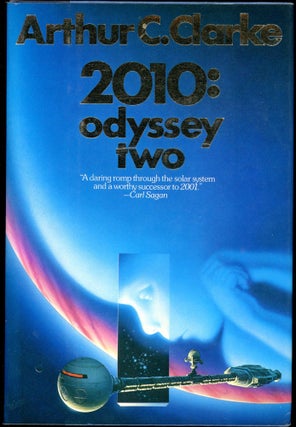
2010: ODYSSEY TWO.
New York: Ballantine Books, [1982]. Octavo, cloth backed boards. First edition. In this sequel to 2001: A SPACE ODYSSEY (1968), "a joint Russian/American expedition to Jupiter resurrects HAL and discovers life on Europa; then the intelligence controlling the monoliths of 2001 begins to move in its characteristically mysterious way, sending a messiah to Earth to save humankind and issuing a new commandment forbidding access to Europa. The combination of technological realism and awed mysticism works as well in these novels as anywhere else in Clarke's work, and the religious imagery is even more pronounced than in CHILDHOOD'S END (1953)." - Anatomy of Wonder (2004) II-254. Made into a film in 1984 directed by Peter Hyams.
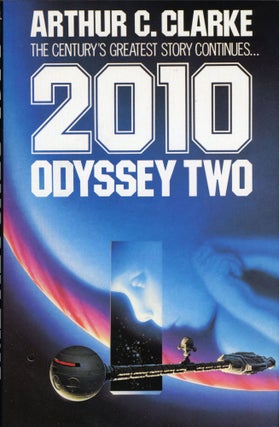
2010: ODYSSEY TWO.
London, Toronto, Sydney, New York: Granada, [1982]. Octavo, boards. First British edition, later state or printing (title leaf is integral, not a cancel and "Clarke" is spelled correctly on copyright page). [Reference: Anatomy of Wonder (1995) 4-110].
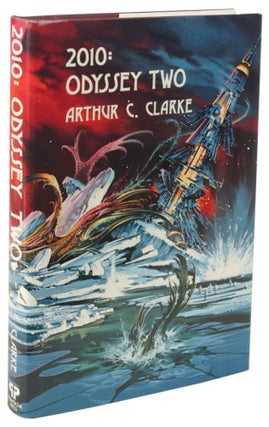
2010: ODYSSEY TWO.
Huntington Woods, MI: Phantasia Press, 1982. Octavo, cloth. First edition. One of 650 numbered copies signed by Clarke. In this sequel to 2001: A SPACE ODYSSEY (1968), "a joint Russian/American expedition to Jupiter resurrects HAL and discovers life on Europa; then the intelligence controlling the monoliths of 2001 begins to move in its characteristically mysterious way, sending a messiah to Earth to save humankind and issuing a new commandment forbidding access to Europa. The combination of technological realism and awed mysticism works as well in these novels as anywhere else in Clarke's work, and the religious imagery is even more pronounced than in CHILDHOOD'S END (1953)." - Anatomy of Wonder (2004) II-254. Made into a film in 1984 directed by Peter Hyams. [Reference: Anatomy of Wonder (1995) 4-110].
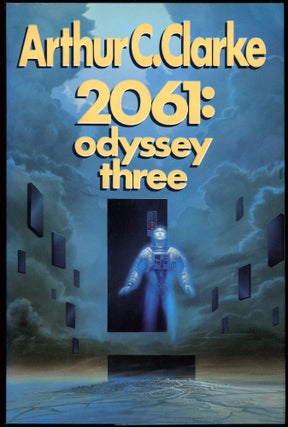
2061: ODYSSEY THREE.
New York: Ballantine Books, [1988, i.e. 1987]. Octavo, cloth backed boards. First edition. The third book in the series. This book was schedule for release January 1988 but copies were put on sale late 1987.
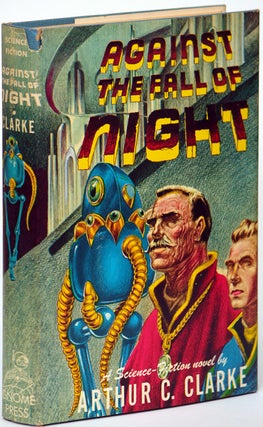
AGAINST THE FALL OF NIGHT.
[New York]: Gnome Press, Inc., [1953]. Octavo, boards. First edition.
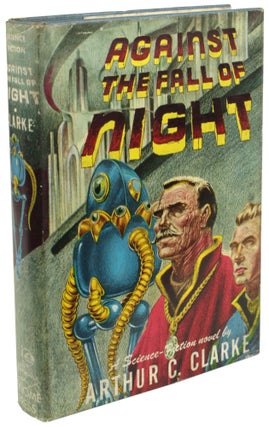
AGAINST THE FALL OF NIGHT.
[New York]: Gnome Press, Inc., [1953]. Octavo, boards. First edition. Inscribed and signed by Clarke on the front free endpaper. Expanded and rewritten as THE CITY AND THE STARS (1956). This earlier version utilizing the archetypal youth's quest and coming of age theme, a theme lost in the revised version, is still preferred by many readers. [Reference: Anatomy of Wonder (2004) II-245. Survey of Science Fiction Literature I, pp. 374-77].
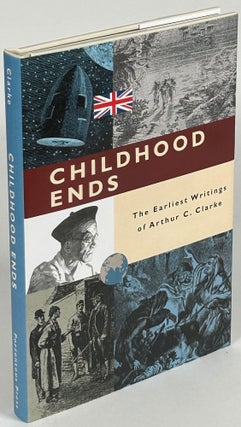
CHILDHOOD ENDS: THE EARLIEST WRITINGS OF ARTHUR C. CLARKE. Edited by David Aronovitz.
[Rochester, MI]: Portentous Press, 1996. Octavo, cloth. First edition. Limited to 85 copies signed by Clarke. A collection of Clarke's earliest writings from the period 1932 to 1938, none of which were previously published in book form.
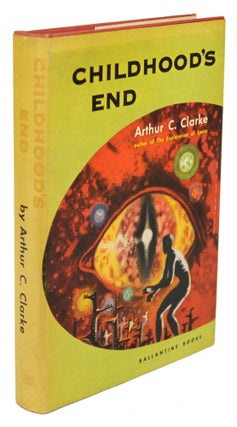
CHILDHOOD'S END.
New York: Ballantine Books, [1953]. Octavo, cloth. First edition. An enormously popular novel presaging Clarke's major thematic statements in 2001: A SPACE ODYSSEY. Aired as a miniseries on the SyFy channel in December 2015. [Reference: Anatomy of Wonder (2004) II-246. Pringle, Science Fiction: The 100 Best Novels 9. Survey of Science Fiction Literature I, pp. 337-41].

THE CITY AND THE STARS with AGAINST THE FALL OF NIGHT .
[Lakewood, CO: Centipede Press, 2017]. Octavo, two volumes, cloth. New editions. One of 250 numbered copies signed by Robert Silverberg and the artist Bob Eggleton (Against the Fall of Night only signed by Eggleton). This set is copy number 1. New printings of the THE CITY AND THE STARS (1956) and the original version AGAINST THE FALL OF NIGHT (1953). [Reference: Anatomy of Wonder (2004) II-245. Pringle, Science Fiction: The 100 Best Novels 22. Survey of Science Fiction Literature I, pp. 374-77].
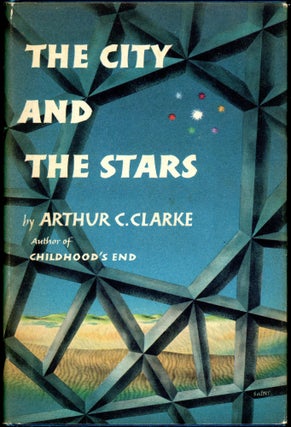
THE CITY AND THE STARS.
New York: Harcourt, Brace and Company, [1956]. Octavo, boards. First edition. A completely revised and expanded version of Clarke's first published novel, AGAINST THE FALL OF NIGHT (1948; 1953). "Arthur C. Clarke's 2001 (1968) is one of the most famous computer stories, but his THE CITY AND THE STARS (1956) may well be the profound artistically successful work of cybernetic fiction ... [It] is one of the most remarkable accomplishments of the imagination in all the literature that I am considering. Beyond imagining how computers might transform a society, Clarke also dramatizes the philosophical implications of life in a totally structured society. The novel is even more deserving of commendation because it is an early cybernetic novel, and computers and information theory were recent developments when it was written." - Warrick, The Cybernetic Imagination in Science Fiction, pp. 166-70. This novel "is perhaps his most characteristic and most enduring." - Survey of Science Fiction Literature I, pp. 374-7. [Reference: Anatomy of Wonder (2004) II-245. Pringle, Science Fiction: The 100 Best Novels 22].

THE CITY AND THE STARS.
New York: Harcourt, Brace and Company, [1956]. Octavo, boards. First edition. Signed by Clarke on the front free end paper. A completely revised and expanded version of Clarke's first published novel, AGAINST THE FALL OF NIGHT (1948; 1953). "Arthur C. Clarke's 2001 (1968) is one of the most famous computer stories, but his THE CITY AND THE STARS (1956) may well be the profound artistically successful work of cybernetic fiction ... [It] is one of the most remarkable accomplishments of the imagination in all the literature that I am considering. Beyond imagining how computers might transform a society, Clarke also dramatizes the philosophical implications of life in a totally structured society. The novel is even more deserving of commendation because it is an early cybernetic novel, and computers and information theory were recent developments when it was written." - Warrick, The Cybernetic Imagination in Science Fiction, pp. 166-70. This novel "is perhaps his most characteristic and most enduring." - Survey of Science Fiction Literature I, pp. 374-7. [Reference: Anatomy of Wonder (2004) II-245. Pringle, Science Fiction: The 100 Best Novels 22].
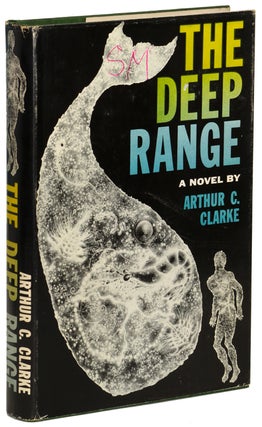
THE DEEP RANGE.
New York: Harcourt, Brace and Company, [1957]. Octavo, boards. First edition. "Classic early story of oceanic exploration."– Anatomy of Wonder (1987) 3-99. Review slip tipped in on front free end paper.

THE DEEP RANGE.
New York: Harcourt, Brace and Company, [1957]. Octavo, boards. First edition. Signed and dated by Clarke on the title page. "Classic early story of oceanic exploration."– Anatomy of Wonder (1987) 3-99.
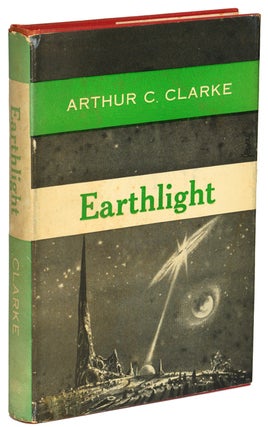
EARTHLIGHT.
New York: Ballantine Books, [1955]. Octavo, cover art by Richard Powers, cloth. First edition. An early science fiction novel of man's first colony on the moon. Dust jacket art by Richard Powers.

EXPEDITION TO EARTH ...
New York: Ballantine Books, [1953]. Octavo, boards. First edition. Clarke's first collection of short fiction. "Eleven early stories by this major author, most of them involving space travel and the far future, and written in a yearning, quasi-poetic style. Often they have little stings in the tail. Includes 'The Sentinel' (1951), which later formed the basis of the novel and film 2001: A SPACE ODYSSEY (1968)." - Pringle, The Ultimate Guide to Science Fiction, second edition (1995), pp. 125-6. [Reference: Anatomy of Wonder (1987) 3-100].

EXPEDITION TO EARTH.
New York: Ballantine Books, [1953]. Octavo, cover art by Richard Powers, pictorial wrappers. First edition. Ballantine 52. Eleven early stories by this major author, most of them involving space travel and the far future, and written in a yearning, quasi-poetic style. Often they have little stings in the tail. Includes "The Sentinel" (1951), which later formed the basis of the novel and film 2001: A SPACE ODYSSEY (1968). [Reference: Anatomy of Wonder (1987) 3-100].
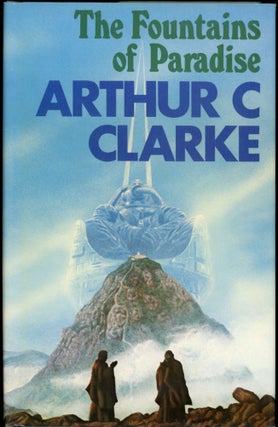
THE FOUNTAINS OF PARADISE.
London: Victor Gollancz Ltd., 1979. Octavo, boards. First edition. Winner of the 1979 Nebula and 1980 Hugo awards for best novel. [Reference: Anatomy of Wonder (2004) II-250].
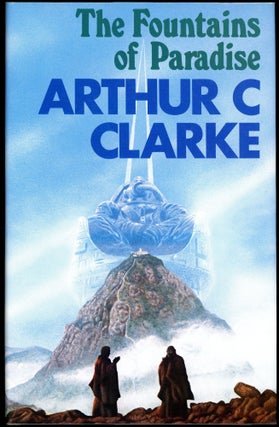
THE FOUNTAINS OF PARADISE.
London: Victor Gollancz Ltd., 1979. Octavo, boards. First edition. "On an island in the Indian Ocean a twenty second -century engineer builds a colossal 'space elevator' which will connect with a station in geosynchronous orbit. A blend of old-fashioned Brunel-style technological heroics with Sri Lankan myth, effectively done in Clarke's best style." - Pringle, The Ultimate Guide to Science Fiction, second edition (1995), pp. 143-4. Winner of the 1979 Nebula and 1980 Hugo awards for best novel. [Reference: Anatomy of Wonder (2004) II-250].
THE FOUNTAINS OF PARADISE.
London: Victor Gollancz Ltd., 1979. Octavo, boards. First edition. "On an island in the Indian Ocean a twenty second -century engineer builds a colossal 'space elevator' which will connect with a station in geosynchronous orbit. A blend of old-fashioned Brunel-style technological heroics with Sri Lankan myth, effectively done in Clarke's best style." - Pringle, The Ultimate Guide to Science Fiction, second edition (1995), pp. 143-4. Winner of the 1979 Nebula and 1980 Hugo awards for best novel. [Reference: Anatomy of Wonder (2004) II-250].
THE FOUNTAINS OF PARADISE.
London: Victor Gollancz Ltd, 1979. Octavo, boards. First edition. Winner of the 1979 Nebula and 1980 Hugo awards for best novel. [Reference: Anatomy of Wonder (2004) II-250].
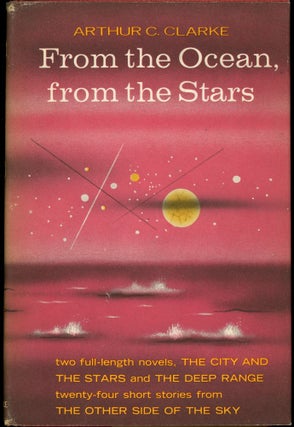
FROM THE OCEAN, FROM THE STARS.
New York: Harcourt, Brace & World, Inc., [1962]. Octavo, cloth. First combined edition. Collects THE CITY AND THE STARS (1956), THE DEEP RANGE (1957), and THE OTHER SIDE OF THE SKY (1958).
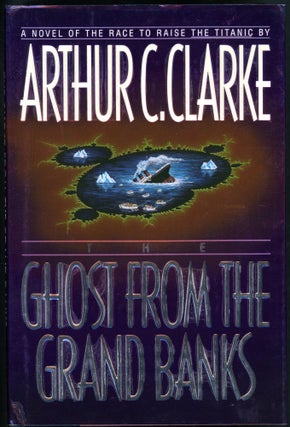
THE GHOST FROM THE GRAND BANKS.
New York: Ballantine Books, [1990]. Octavo, cloth backed boards. First U.S. edition. A novel of a race to raise the Titanic in the early 21st Century.