
Results
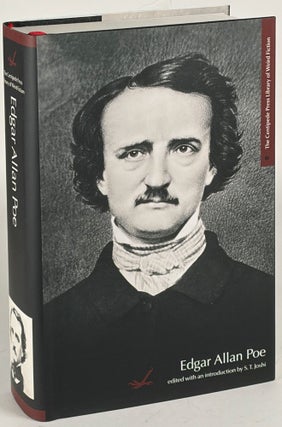
EDGAR ALLAN POE: THE CENTIPEDE PRESS LIBRARY OF WEIRD FICTION. Edited and introduction by S. T. Joshi.
[Lakewood, CO: Centipede Press, 2014]. Octavo, cloth. First edition. 500 copies printed. Collection of the author's best works, including "Ligeia," "The Fall of the House of Usher," and "The Narrative of Arthur Gordon Pym." Includes a bibliography.

TALES OF MYSTERY AND IMAGINATION ...
New York: Tudor Publishing Co., 1933. Large octavo, pp. [1-8] 9-412 [413: tailpiece illustration] [414-416: blank] [note: last leaf is a blank], 32 inserted plates with 24 full-page black and white illustations and eight full-page color illustrations by Harry Clarke, other smaller black and white Clarke illustrations in the text, original black cloth, spine panel stamped in gold, pictorial paper onlay on front panel, top edge stained black, black endpapers. First printing of this edition. This book, first published in 1919, was first reprinted by Tudor in 1933. The classic illustrated edition of Poe's short fiction and the most memorable of Clarke's illustrated books. "As with Dore, a fellow master of haunted black-and-white art for books, overwork taxed and prematurely killed Clarke. His art is prized by collectors. He brought beauty to the Gothic, conveying the Romantic sense of wonder so necessary to lift horror above the merely grotesque to eerie heights."– Sullivan (ed), The Penguin Encyclopedia of Horror and the Supernatural, p. 81. [Reference: Reginald 11712].
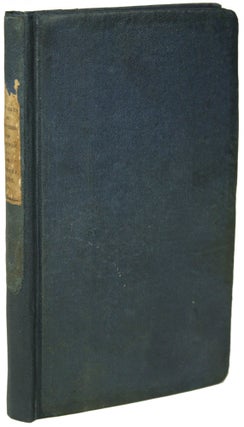
THE NARRATIVE OF ARTHUR GORDON PYM. OF NANTUCKET ...
New-York: Harper & Brothers, 1838. Octavo, pp. [1]-2 [leaf of ads dated "May, 1838"] [iii-v] vi-vii [viii] [9] 10-201 [202: blank] [1]-14 [ads], fly leaf at front, original pebble grain blue muslin, printed paper label affixed to spine panel, untrimmed. First edition. Poe's first prose book and his only book-length work of fiction, one of the nineteenth century's most fantastic short novels. "A novel of horrendous sea adventure, followed by extraordinary experiences in the Antarctic ... Critically, Pym has generally been held in low esteem, but this is probably because of the full-blown sensation approach of the first part of the novel, which retails more horrors in one short voyage than would have taken place in a sailor's lifetime or more. But considered within the aesthetics of BLACKWOOD'S, it is a fine achievement. As for the second, puzzle section, it remains successfully puzzling after a century and a half." - Bleiler, Science-Fiction: The Early Years 1784. "Clearly, THE NARRATIVE OF ARTHUR GORDON PYM has exerted a powerful influence on its readers, and its entrancing ending in particular has aroused considerable interest. The novel has become a frequent subject for scholarly debate and a rich source for numerous literary and artistic endeavors, and in the last twenty-five years, it has come to be recognized as a masterpiece." - Survey of Modern Fantasy Literature III, pp. 1092-95. [Reference: Anatomy of Wonder (1976) 1-41; (1981) 1-138; (1987) 1-74; (1995) 1-74: and (2004) II-857. Bailey, Pilgrims Through Space and Time, pp. 43-4. Barron (ed), Horror Literature 2-76. Bleiler, The Guide to Supernatural Fiction 1313. Bleiler (ed), Science Fiction Writers, pp. 15-7. Survey of Science Fiction Literature III, pp. 1480-87. Tymn (ed), Horror Literature 2-78. Bleiler (1978), p. 159. Reginald 11610. BAL 16128. Wright (I) 2052. Heartman and Canny, pp. 38-40].