
Results
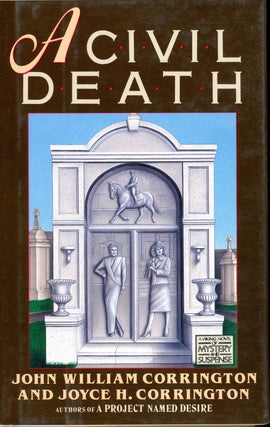
A CIVIL DEATH.
New York: Viking, 1987. Octavo, Hardcover. First edition.
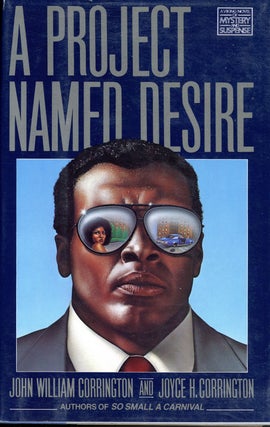
A PROJECT NAMED DESIRE.
New York: Viking, 1987. Octavo, Hardcover. First edition.
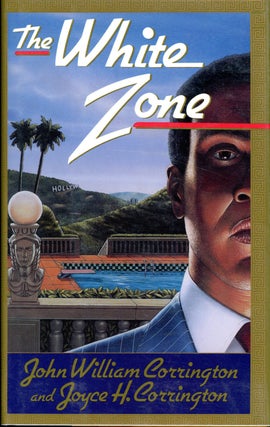
THE WHITE ZONE.
New York: Viking, 1990. Octavo, Hardcover. First edition.

TALES OF TERROR.
London: Chatto & Windus, 1899. Octavo, pp. [1-8] [1] 2-325 [326: blank] [327: publisher's device] [328: blank] + 32-page catalogue dated "Sept. 1899" inserted at rear, original burgundy cloth, front panel stamped in tan, white and black, spine panel stamped in gold, fore and bottom edges untrimmed. First edition. "Wonderfully lurid sensational horror stories, in full-blooded manner of Victorian melodrama; story titles such as 'The Corpse Light,' 'The Cave of Blood,' and 'A Night of Horror' say it all." - Robert Knowlton. [Reference: Ashley, Who's Who in Horror and Fantasy Fiction, p. 68. Barron (ed), Horror Literature 2-70. Sullivan (ed), The Penguin Encyclopedia of Horror and the Supernatural, p. 130. Tymn (ed), Horror Literature 3-66. Wilson, Shadows in the Attic, p. 192. Bleiler (1978), p. 62. Reginald 10482. Not in Wolff].
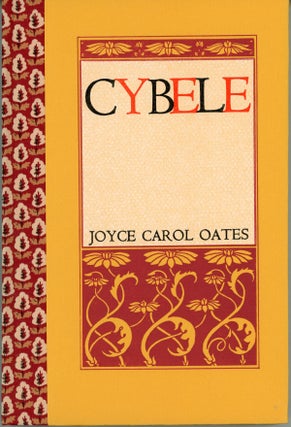
CYBELE.
Santa Barbara: Black Sparrow Press, 1979. Octavo, cloth-backed boards. First edition. Copy number 23 of 50 numbered handbound copies signed by Oates. [Reference: Dickinson A54d].
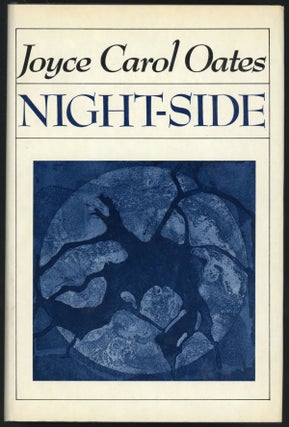
NIGHT-SIDE: EIGHTEEN TALES.
New York: The Vanguard Press, Inc., [1977]. Octavo, cloth. First edition. "Eighteen stories first published in mainstream literary journals, all remarkable for their psychologically acute explorations of the dark side of ordinary experience ... Oates rivals Flannery O'Connor in her ability to bring grotesque characters vividly to life, and Shirley Jackson in her skill at evoking the perversity of everyday human nature. The stories in NIGHT-SIDE are provocative and haunting for their depiction of characters for whom alienation and solipsism are an unavoidable response to life." - Barron (ed), Fantasy and Horror (1999) 6-291.

CONSCIENCE PLACE ...
Garden City: Doubleday & Company, Inc., 1984. Octavo, cloth-backed boards. First edition. In a contemporary America a residence "camp" has been secretly set-up for the deformed children of nuclear plant workers. [Reference: Sargent, British and American Utopian Literature, 1516-1985, p. 426].