
Results
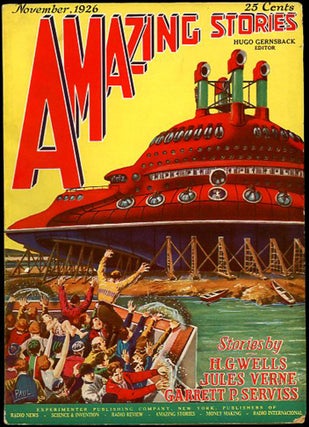
AMAZING STORIES.
New York: Experimenter Publishing Company, 1926. Large octavo, single issue, cover by Frank R. Paul, pictorial wrappers. Pulp magazine, bedsheet format. Fiction by H. G. Wells, Jules Verne, Garrett P. Serviss, A. Hyatt Verrill and Murray Leinster. [Reference: Tymm and Ashley, Science Fiction, Fantasy, and Weird Fiction Magazines, pp. 14-49].
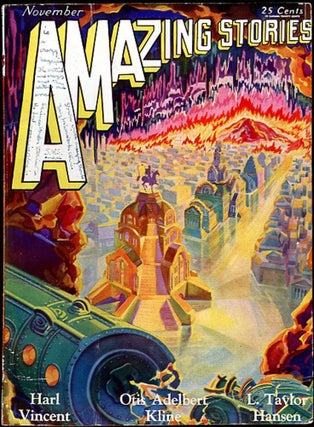
AMAZING STORIES.
Jamaica, NY: Experimenter Publications, Inc., 1929. Large octavo, single issue, cover by Hans W. Wesso, pictorial wrappers. Pulp magazine, bedsheet format. Fiction by Allen S. and Otis Adelbert Kline, Harl Vincent, L[ucille] Taylor Hansen, Minna Irving and others. [Reference: Tymm and Ashley, Science Fiction, Fantasy, and Weird Fiction Magazines, pp. 14-49].
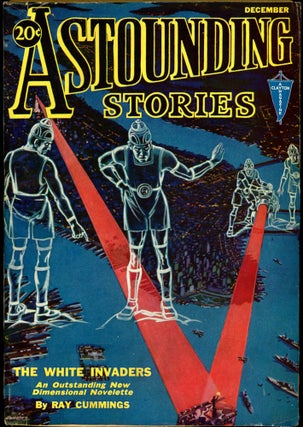
ASTOUNDING STORIES.
New York: The Clayton Magazines, Inc., 1931. Octavo, cover painting by Wesso[lowski], pictorial wrappers. Pulp magazine. Stories by Ray Cummings, Robert H. Wilson, Murray Leinster and others. [Reference: Tymm and Ashley, Science Fiction, Fantasy, and Weird Fiction Magazines, pp. 60-103].
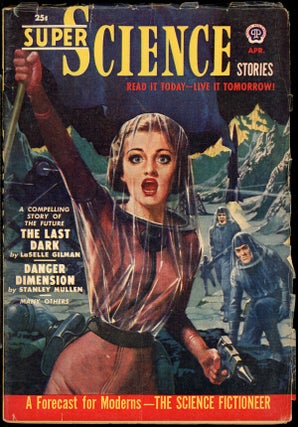
SUPER SCIENCE STORIES.
Toronto: Fictioneers, Inc., 1951. Octavo, single issue, cover by Lawrence, pictorial wrappers. Pulp magazine, Canadian issue, issued simultaneously with the U. S. edition with identical story content, editorial control in New York. [Reference: Tymn and Ashley (eds), Science Fiction, Fantasy, and Weird Fiction Magazines, pp. 631-635].
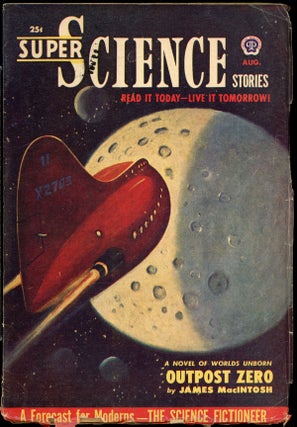
SUPER SCIENCE STORIES.
Toronto: Fictioneers, Inc., 1951. Octavo, single issue, cover by Morey, pictorial wrappers. Pulp magazine, Canadian issue, issued simultaneously with the U. S. edition with identical story content, editorial control in New York. Includes a Professor Jameson story by Neil R. Jones. This is the final issue. [Reference: Tymn and Ashley (eds), Science Fiction, Fantasy, and Weird Fiction Magazines, pp. 631-635].
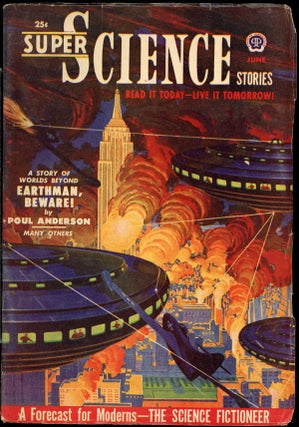
SUPER SCIENCE STORIES.
Toronto: Fictioneers, Inc., 1951. Octavo, single issue, cover by Van Dongen, pictorial wrappers. Pulp magazine, Canadian issue, issued simultaneously with the U. S. edition with identical story content, editorial control in New York. Stories by Poul Anderson, Robert Bloch, John D. MacDonald (two stories one as Peter Reed), and others. [Reference: Tymn and Ashley (eds), Science Fiction, Fantasy, and Weird Fiction Magazines, pp. 631-635].

FAMOUS FANTASTIC MYSTERIES.
Chicago: All-Fiction Field, Inc., 1947. Octavo, single issue cover by Virgil Finlay, printed wrappers. Pulp magazine. Features "MINIMUM MAN, OR, TIME TO BE GONE" by Andrew Marvell. [Reference: Tymm and Ashley, Science Fiction, Fantasy, and Weird Fiction Magazines, pp. 211-216].
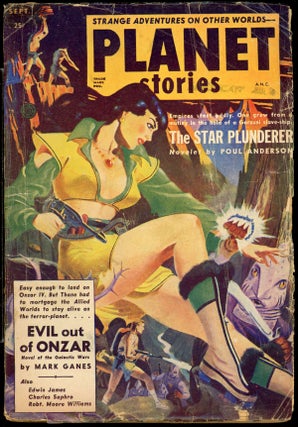
PLANET STORIES.
New York: Love Romances, 1952. Octavo, single issue, cover by Vestal, pictorial wrappers. Pulp magazine. Incudes Philip K. Dick"s second professionally published story, "The Gun." Unabashedly the magazine was a proponent of "space-opera." In Leigh Brackett's introduction in the anthology THE BEST OF PLANET STORIES (1974) she states "the so-called space opera is the folk-tale, the hero-tale of our particular niche in history." [Reference: Tymm and Ashley, Science Fiction, Fantasy, and Weird Fiction Magazines, pp. 476-481].
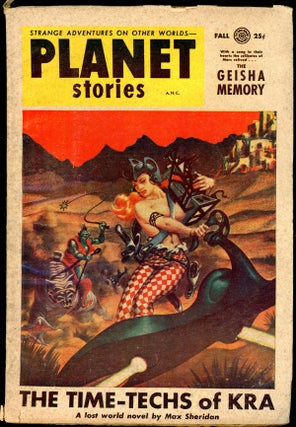
PLANET STORIES.
New York: Love Romances, 1954. Octavo, single issue, cover by Freas, pictorial wrappers. Pulp magazine. Includes fiction by Robert Sheckley. Unabashedly the magazine was a proponent of "space-opera." In Leigh Brackett's introduction in the anthology THE BEST OF PLANET STORIES (1974) she states "the so-called space opera is the folk-tale, the hero-tale of our particular niche in history." [Reference: Tymm and Ashley, Science Fiction, Fantasy, and Weird Fiction Magazines, pp. 476-481].
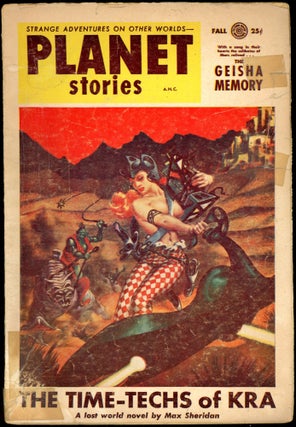
PLANET STORIES.
New York: Love Romances, 1954. Octavo, single issue, cover by Freas, pictorial wrappers. Pulp magazine. Includes fiction by Robert Sheckley. Unabashedly the magazine was a proponent of "space-opera." In Leigh Brackett's introduction in the anthology THE BEST OF PLANET STORIES (1974) she states "the so-called space opera is the folk-tale, the hero-tale of our particular niche in history." [Reference: Tymm and Ashley, Science Fiction, Fantasy, and Weird Fiction Magazines, pp. 476-481].
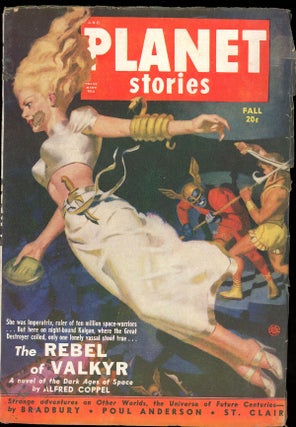
PLANET STORIES.
New York: Love Romances, 1950. Octavo, single issue, pictorial wrappers. Pulp magazine. Includes "Death-Wish" by Ray Bradbury. Unabashedly the magazine was a proponent of "space-opera." In Leigh Brackett's introduction in the anthology THE BEST OF PLANET STORIES (1974) she states "the so-called space opera is the folk-tale, the hero-tale of our particular niche in history." [Reference: Tymm and Ashley, Science Fiction, Fantasy, and Weird Fiction Magazines, pp. 476-481].
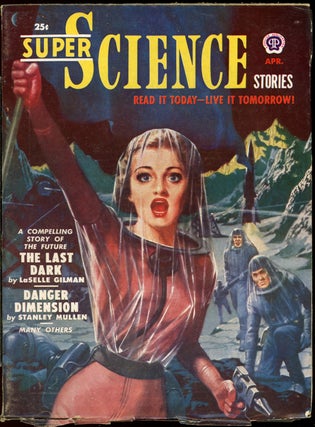
SUPER SCIENCE STORIES.
Kokomo, IN: Fictioneers, Inc., 1950. Octavo, single issue, cover by Lawrence, pictorial wrappers. Pulp magazine. Stories by Stanley Mullen, Katherine MacClean, Leigh Brackett, Frank Belknap Long and others. [Reference: Tymn and Ashley (eds), Science Fiction, Fantasy, and Weird Fiction Magazines, pp. 631-635].
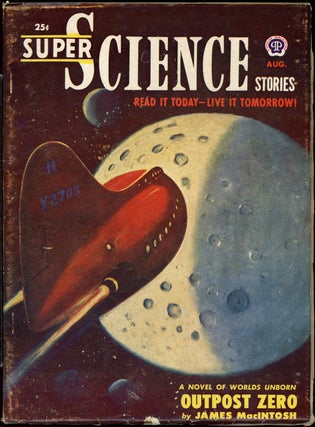
SUPER SCIENCE STORIES.
Kokomo, IN: Fictioneers, Inc., 1951. Octavo, single issue, cover by Morey, pictorial wrappers. Pulp magazine. Includes a Professor Jameson story by Neil R. Jones. This is the final issue. [Reference: Tymn and Ashley (eds), Science Fiction, Fantasy, and Weird Fiction Magazines, pp. 631-635].

THE FANTASY COMMENTATOR. (1944-1948) in two bound volumes.
New York: A. Langley Searles. 1943-1948. Large octavo, twenty issues. mimeographed bound in two cloth volumes, volume one: issues 1-12 pp. 1-340 [note: 339-340 index]. volume two, issues 13-20 pp. 1-294 [note: 294 index]. A major amateur magazine devoted to the study of fantastic fiction. "...one of the earliest fan-based magazines that could be regarded as an Academic Journal based on its scholarly articles." - SFE online. Contributors included William Evans, David H. Keller, H. C. Koenig, A. Merritt, Sam Moskowitz, Darrell C. Richardson, George Wetzel and many others. Articles and commentary on books, authors, themes, etc. In these pages was the first publication of the first major work on fandom, "The Immortal Storm" by Sam Moskowitz. Vol. 1, no. 1 is a second printing limited to 60 copies, July 1946, Vol. 1, no. 2, second printing, limited to 90 copies, January 1947, Vol. 1, no. 3, second printing limited to 60 copies, March 1946. Hightlights: Issue one. 12/43. E.F. Benson, critical notes of September FAPA mailing. Issue two. 6/44. Notes on March 1944 FAPA Issue three. 9/44. Notes on June 1944 FAPA. This issue largely devoted to Wm. Hope Hodgson and Moskowtiz reviews on old magazines. Issue four. 12/44. Haggard checklist, fantasy in Blue Book. Review of George Fowler book. Issue five. W. 44/45. Lost Race article. Moskowitz article on Marvel Tales amateur magazine. Article on forgotten supernatural fiction writer Wintle. Retrospective on past 10 years of SF in magazines. Article by A. Merritt. Issue six. Sp. 45. M. Onderdonk on HPL. (over 9 pages). Appreciation of Wm. Hope Hodgson. Article on Ralph Adams Cram. Issue seven. Su. 45. "Future Destiny" article. WTs article focused on Munn. M. Onderdonk on William Sloane and HPL. Article on crackpot stories in Amazing (i.e. Lemuria). Letters from Leiber and Bloch. Issue eight. F. 45. Part 1 of The Immortal Storm by Moskowitz. Article on Dick Donovan. Issue nine. W. 45/46. Article on paperback fantasy in England 1941-45. Article on H. Rider Haggard. Article on Bessie Kyffin-Taylor. Part 2 of The Immortal Storm. Issue ten. Sp. 46. "The Superman in Modern English Fiction" by Richard Witter. The Immortal Storm part 3. Issue eleven. Su 46. The Immortal Storm part 4. Fantasy in "The Idler". Issue twelve. F 46. The Immortal Storm part 5. Article on more British paperback fantasy, 1945-46. Article on HPL by George Wetzel. Issue thirteen (Vol 2). W. 46-47. The Immortal Storm part 6. Fantasy in Munsey publications part 1. Issue fourteen. Sp. 47. The Immortal Storm part 7. Fantasy in Munsey publications (conclusion). David H. Keller on his writing with bibliography. Issue fifteen. Su. 47. The Immortal Storm part 8. Article by Henry Kuttner. Issue sixteen. F. 47. The Immortal Storm part 9. Article on "The Gothic Novel and Percy B. Shelley." Article on The Thrill Book. Issue seventeen. W. 48. The Immortal Storm part 10. Issue eighteen. Sp. 48. The Immortal Storm part 11. Several articles on HPL. Issue nineteen. Su. 48. The Immortal Storm part 12. Fantasy in Romance magazine. HPL article by Keller. Issue twenty. F. 48. The Immortal Storm part 13. Article on Talbot Mundy. [Reference: Pavlat and Evans, Fanzine Index (1965), pp. 36-7. Tymn and Ashley (eds), Science Fiction, Fantasy, and Weird Fiction Magazines, p. 822].
![Item #16182 MYSTERY MAGAZINE: THE ILLUSTRATED DETECTIVE MAGAZINE [COVER TITLE]. 1933. . THE...](https://jwkbooks.cdn.bibliopolis.com/pictures/16182.jpg?width=320&height=427&fit=bounds&auto=webp&v=1417034500)
MYSTERY MAGAZINE: THE ILLUSTRATED DETECTIVE MAGAZINE [COVER TITLE].
Chicago, IL: Tower Magazines, Inc., 1933. Large octavo, single issue, pictorial wrappers. "The House Under the Lake" by Herbert Adams. Also fiction by Stuart Palmer (Hildegarde Withers), Mignon G. Eberhart, Hulbert Footner, and others. A large format, densely illustrated, bedsheet-sized pulp. "The fiction emphasized the woman's point of view, was often narrated by a woman, and featured as many feminine as masculine detectives. In the rear of the magazine flowered all the usual departments of a more conventional woman's publication ... That this magazine would publish much fiction of interest seems improbable. But without effort, it contrived to be superb. ILLUSTRATED DETECTIVE selected outstanding writers who had made their mark in the 1920s and mingled these with rising writers of the 1930s. Over the years, the magazine would publish work by top names in the mystery field, including Ellery Queen, Stuart Palmer, Sax Rohmer, Arnold Kummer, Hulbert Footner, Vincent Starrett and H. Bedford-Jones. The fiction was polished, often strongly compressed, and good enough for a large amount of it to appear later between book covers. The magazine appeared monthly for almost six years, sixty-nine issues, at ten cents a copy. After three years, the title was changed to THE MYSTERY MAGAZINE ... Covers were tasteful, bright, and uneventful, relying heavily on the faces of self-confident women. Inside was an astonishing amount of material: eight to ten pieces of fiction, four or more crime-fact articles, and up to ten continuing departments (about half of these slanted directly toward women). When the magazine was at its peak in the early 1930s, it offered material carefully calculated to appeal to most tastes and both sexes ... MYSTERY was as meticulously planned as an orchestral score. Its careful variations played upon every shade of reader interest. It was consciously polished, self-consciously feminine. A curious pared sound rang in its fiction, as if the stories had been edited with a chain saw, but the prose flashed with a bright nickel glitter. Slick the magazine may have been, and often over illustrated, but it was also considerably interesting and, for years, excellent." - Cook, Mystery, Detective, and Espionage Magazines, pp. [287]-90.
![Item #16183 MYSTERY MAGAZINE: THE ILLUSTRATED DETECTIVE MAGAZINE [COVER TITLE]. 1933. . THE...](https://jwkbooks.cdn.bibliopolis.com/pictures/16183.jpg?width=320&height=427&fit=bounds&auto=webp&v=1417034500)
MYSTERY MAGAZINE: THE ILLUSTRATED DETECTIVE MAGAZINE [COVER TITLE].
Chicago, IL: Tower Magazines, Inc., 1933. Large octavo, single issue, pictorial wrappers. "The House Under the Lake" by Herbert Adams. Also fiction by Stuart Palmer (Hildegarde Withers), Mignon G. Eberhart, Hulbert Footner, and others. A large format, densely illustrated, bedsheet-sized pulp. "The fiction emphasized the woman's point of view, was often narrated by a woman, and featured as many feminine as masculine detectives. In the rear of the magazine flowered all the usual departments of a more conventional woman's publication ... That this magazine would publish much fiction of interest seems improbable. But without effort, it contrived to be superb. ILLUSTRATED DETECTIVE selected outstanding writers who had made their mark in the 1920s and mingled these with rising writers of the 1930s. Over the years, the magazine would publish work by top names in the mystery field, including Ellery Queen, Stuart Palmer, Sax Rohmer, Arnold Kummer, Hulbert Footner, Vincent Starrett and H. Bedford-Jones. The fiction was polished, often strongly compressed, and good enough for a large amount of it to appear later between book covers. The magazine appeared monthly for almost six years, sixty-nine issues, at ten cents a copy. After three years, the title was changed to THE MYSTERY MAGAZINE ... Covers were tasteful, bright, and uneventful, relying heavily on the faces of self-confident women. Inside was an astonishing amount of material: eight to ten pieces of fiction, four or more crime-fact articles, and up to ten continuing departments (about half of these slanted directly toward women). When the magazine was at its peak in the early 1930s, it offered material carefully calculated to appeal to most tastes and both sexes ... MYSTERY was as meticulously planned as an orchestral score. Its careful variations played upon every shade of reader interest. It was consciously polished, self-consciously feminine. A curious pared sound rang in its fiction, as if the stories had been edited with a chain saw, but the prose flashed with a bright nickel glitter. Slick the magazine may have been, and often over illustrated, but it was also considerably interesting and, for years, excellent." - Cook, Mystery, Detective, and Espionage Magazines, pp. [287]-90.
![Item #28286 WEIRD TALES [U.K. edition]. U K. Edition, No. 1. Dorothy McIlwraith WEIRD TALES. . ....](https://jwkbooks.cdn.bibliopolis.com/pictures/28286.jpg?width=320&height=427&fit=bounds&auto=webp&v=1639521535)
WEIRD TALES [U.K. edition].
New York, NY: Weird Tales, 1950, i.e. 1951. Octavo, single issue, cover art by Frank Kelly Freas, pictorial wrappers. Pulp Magazine. Contents identical to the November 1950 U. S. edition, most of the adverts in the rear are the U. S. ads. Includes stories by Fritz Leiber, Margaret St. Clair, Mary Elizabeth Counselman, and others. First cover art by Freas. [Reference: Tymm and Ashley, Science Fiction, Fantasy, and Weird Fiction Magazines, pp. 727-736].