
Results
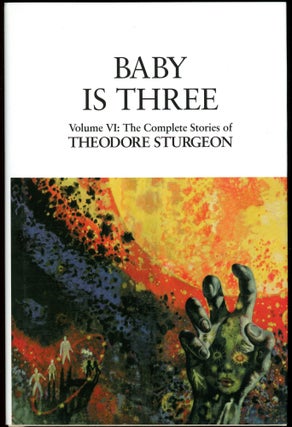
BABY IS THREE: VOLUME VI: THE COMPLETE STORIES OF THEODORE STURGEON...
Berkeley, CA: North Atlantic Books, [1999]. Octavo, cloth. First edition. Story collection which covers the period 1950-52.
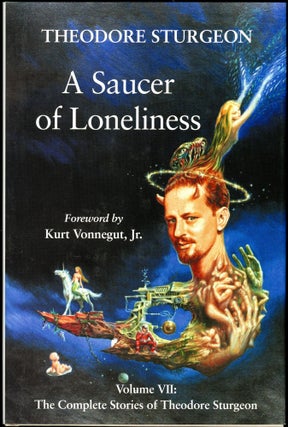
A SAUCER OF LONELINESS: VOLUME VII: THE COMPLETE STORIES OF THEODORE STURGEON...
Berkeley, CA: North Atlantic Books, [1999]. Octavo, cloth. First edition. Story collection which covers the period 1952-53.
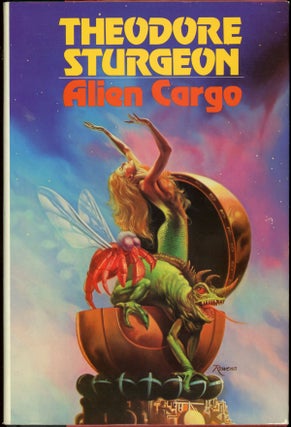
ALIEN CARGO.
[New York: Bluejay Books, Inc., 1984]. First edition. Collects fourteen stories first published between 1939 and 1955.
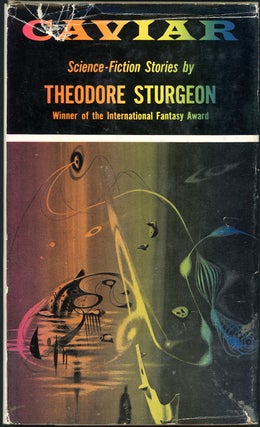
CAVIAR.
New York: Ballantine Books, [1955]. Octavo, cover art by Richard Powers, cloth. First edition. Collects eight stories, "including the early 'Microcosmic God' (1941), about a scientist who breeds a race of tiny intelligent creatures. Another of the most memorable tales, 'Bright Segment' (1955), a powerful piece about a freakish recluse and his love for a badly injured woman, is non-SF (though quintessential Sturgeon)." - Pringle, The Ultimate Guide to Science Fiction, second edition (1995), p. 61. Sturgeon's fourth collection of short fiction, his first published in paperback as well as hardcover. [Reference: Bleiler, The Guide to Supernatural Fiction 1560].
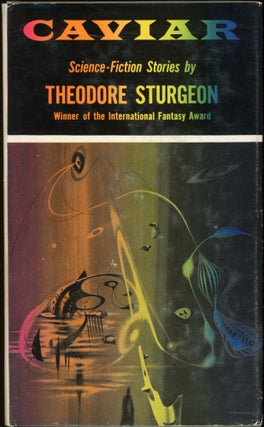
CAVIAR.
New York: Ballantine Books, [1955]. Octavo, cover art by Richard Powers, cloth. First edition. Collects eight stories, "including the early 'Microcosmic God' (1941), about a scientist who breeds a race of tiny intelligent creatures. Another of the most memorable tales, 'Bright Segment' (1955), a powerful piece about a freakish recluse and his love for a badly injured woman, is non-SF (though quintessential Sturgeon)." - Pringle, The Ultimate Guide to Science Fiction, second edition (1995), p. 61. Sturgeon's fourth collection of short fiction, his first published in paperback as well as hardcover. [Reference: Bleiler, The Guide to Supernatural Fiction 1560].
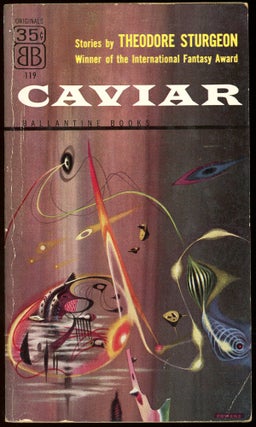
CAVIAR.
New York: Ballantine Books, [1955]. Small octavo, cover art by Richard Powers, pictorial wrappers. First edition, paperback issue. Ballantine 119. Signed by Sturgeon on the title page. Collects eight stories, "including the early 'Microcosmic God' (1941), about a scientist who breeds a race of tiny intelligent creatures. Another of the most memorable tales, 'Bright Segment' (1955), a powerful piece about a freakish recluse and his love for a badly injured woman, is non-SF (though quintessential Sturgeon)." - Pringle, The Ultimate Guide to Science Fiction, second edition (1995), p. 61. Sturgeon's fourth collection of short fiction. [Reference: Bleiler, The Guide to Supernatural Fiction 1560].
THE DREAMING JEWELS.
New York: Greenberg, [1950]. Octavo, cloth. First edition. [Reference: Anatomy of Wonder (2004) II-1098. Survey of Science Fiction Literature V, pp. 2215-17. King list, p. 391. In 333].
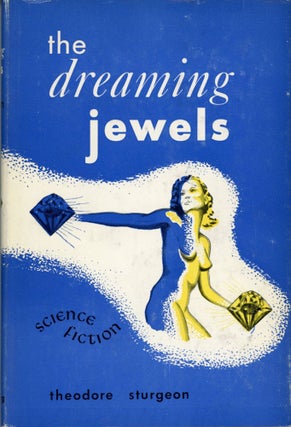
THE DREAMING JEWELS.
New York: Greenberg: Publisher, [1950]. Octavo, pp. [1-4] 1-217 [218-220: blank] [note: last leaf is a blank], original blue cloth, front panel stamped in purple and silver, spine panel stamped in black and silver. First edition. Signed on the title page by Sturgeon. "A runaway boy joins a carnival where the freaks make communication with an alien intelligence. A delightful (somewhat autobiographical) story, written with great feeling." - Pringle, The Ultimate Guide to Science Fiction, second edition (1995), p. 109. The author's second book and first novel. [Reference: Anatomy of Wonder (2004) II-1098. Survey of Science Fiction Literature V, pp. 2215-17. King list, p. 391. In 333].
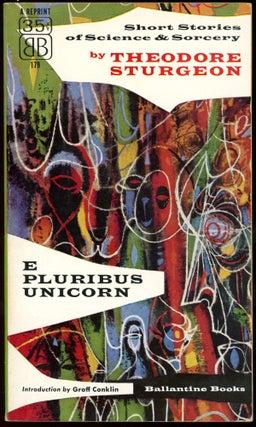
E PLURIBUS UNICORN.
New York: Ballantine Books, [1956]. Small octavo, pictorial wrappers. First paperback edition. Ballantine 179. Signed by Sturgeon on the title page. Story collection.
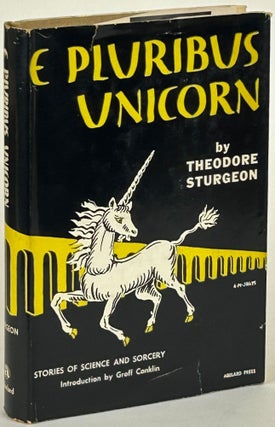
E PLURIBUS UNICORN: A COLLECTION OF SHORT STORIES.
New York: Abelard Press, [1953]. Octavo, boards. First edition. Sturgeon's second collection of short fiction. Collects thirteen stories including "Bianca's Hands" and "Cellmate." "Sturgeon demonstrates considerable imaginative vision in discovering unusual horrific situations as well as consummate artistry in drawing them out." - Barron (ed), Fantasy and Horror 4-148. Introductory essay by Groff Conklin. [Reference: Anatomy of Wonder (2004) II-1099. Bleiler, The Guide to Supernatural Fiction 1559. Survey of Science Fiction Literature II, pp. 676-80].
GODBODY.
New York: Donald I. Fine, 1986. Octavo, Hardcover. First edition.
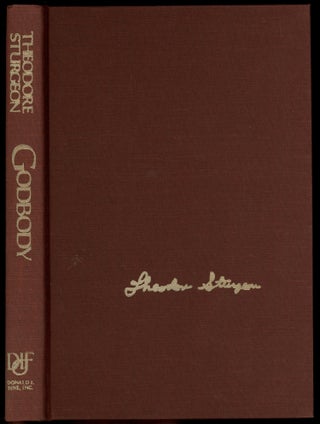
GODBODY.
New York: Donald I. Fine, Inc., [1986]. Octavo, cloth. First edition. One of 350 numbered copies comprising the "Collector's Edition." Posthumously published novel concerning a man named Godbody and involves the theme of transcendence. [Reference: Anatomy of Wonder (1987) 4-545. Barron (ed), Fantasy Literature 4A-240].
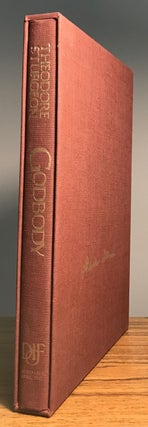
GODBODY.
New York: Donald I. Fine, Inc., [1986]. Octavo, cloth. First edition. One of 350 numbered copies comprising the "Collector's Edition." [Reference: Anatomy of Wonder (1987) 4-545. Barron (ed), Fantasy Literature 4A-240].

GODBODY.
New York: Donald I. Fine, Inc., [1986]. Octavo, pictorial wrappers. Advance uncorrected proof. [Reference: Anatomy of Wonder (1987) 4-545. Barron (ed), Fantasy Literature 4A-240].
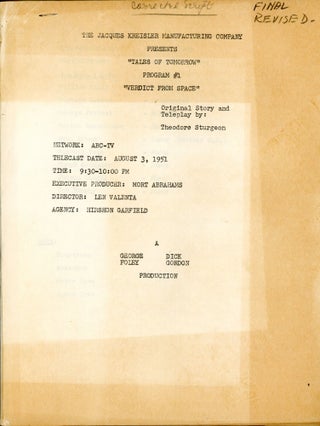
THE JACQUES KREISLER MANUFACTURING COMPANY PRESENTS "TALES OF TOMORROW" PROGRAM #1 "VERDICT FROM SPACE" ORIGINAL STORY AND TELEPLAY BY: THEODORE STURGEON. NETWORK: ABC-TV. TELECAST DATE: AUGUST 3, 1951 ...
[New York]: A George Foley / Dick Gordon Production, 1951. Mimeographed TV script, heavily corrected throughout in pencil. The cover page is marked "Corrected Script" and "FINAL REVISED" in pencil at the top of the sheet. The script is complete and includes cast and crew lists, rehearsal schedule, and inserts on blue paper stock for the commercials that ran during the program. The series, produced by George Foley and Dick Gordon, was performed and broadcast live on ABC-TV from 1951 to 1953. It ran for 85 episodes. The series, originally called Tomorrow is Yours, was developed by Theodore Sturgeon, the series story editor, and Mort Abrahams, the program's executive producer. Tales of Tomorrow was one of the earliest and most successful SF anthology television series. It was ambitious but, like most television of the period, limited by the restrictions imposed by live studio shooting. At a time when most SF on TV was targeted to children, Tales of Tomorrow was intended for adults. It drew its material from a variety of sources, including the SF pulp magazines, as well as using original scripts. "Verdict from Space" is Sturgeon's adaptation of his short story "The Sky Was Full of Ships" which was first published in THRILLING WONDER STORIES, June 1947.
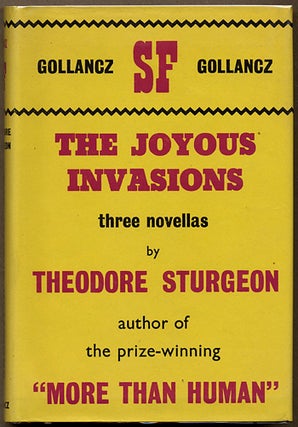
THE JOYOUS INVASIONS.
London: Victor Gollancz Ltd, 1965. Octavo, boards. First edition. Collects three novellas, "To Marry Medusa," "The Comedian's Children" and "The [Widget], the [Wadget], and Boff." This collection was not published in the U.S.
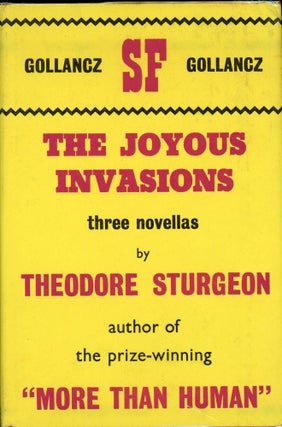
THE JOYOUS INVASIONS.
London: Victor Gollancz Ltd, 1965. Octavo, boards. First edition. Collects three novellas, "To Marry Medusa," "The Comedian's Children" and "The [Widget], the [Wadget], and Boff." This collection was not published in the U.S.
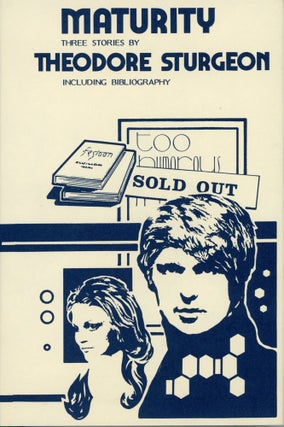
MATURITY: THREE STORIES ...
[Minneapolis]: Minnesota Science Fiction Society, Inc. Rune Press, 1979. Octavo, cloth. First edition. Limited to 750 copies of which this is one of 700 numbered copies signed by Sturgeon. Collects "Maturity," "Bulkhead" and "The Graveyard Reader." Includes a bibliography of Sturgeon's work compiled by Dennis Lien with Jayne Sturgeon, pp. 107-144.
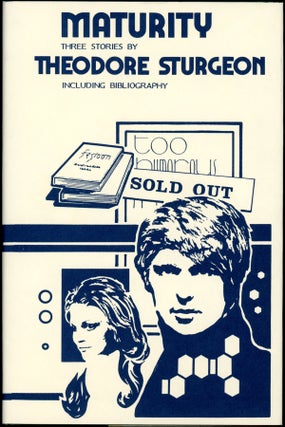
MATURITY: THREE STORIES.
[Minneapolis]: Minnesota Science Fiction Society, Inc. Rune Press, 1979. Octavo, cloth. First edition. Limited to 750 copies of which this is one of 700 numbered copies signed by Sturgeon. Collects "Maturity," "Bulkhead," and "The Graveyard Reader." Includes a Sturgeon bibliography compiled by Dennis Lien and Jayne Sturgeon, pp. 107-44.
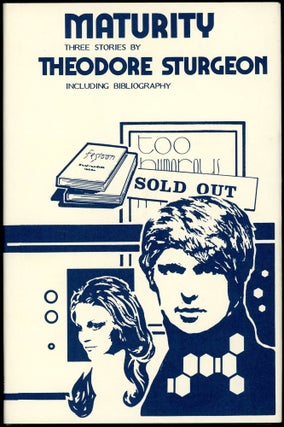
MATURITY: THREE STORIES.
[Minneapolis]: Minnesota Science Fiction Society, Inc. Rune Press, 1979. Octavo, cloth. First edition. Limited to 750 copies of which this is one of 700 numbered copies signed by Sturgeon. Collects "Maturity," "Bulkhead," and "The Graveyard Reader." Includes a Sturgeon bibliography compiled by Dennis Lien and Jayne Sturgeon, pp. 107-44.

MORE THAN HUMAN.
New York: Farrar, Straus & Young, 1953. Octavo, quarter cloth with boards. First edition. Winner of the 1954 International Fantasy Award for best novel. "...this excellent work describes the rise, against all meanness and bigotry's of the surrounding world, of Homo Gestalt, an individual composed of the blended intelligence's of numerous peoples, each of whom retains personal identity while contributing a particular strength or talent to the whole. An emergence-of-the-superhuman story..." Anatomy of Wonder (2004) II-1100. [Reference: Pringle, Science Fiction: The 100 Best Novels 14].
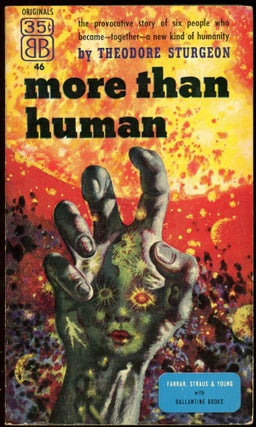
MORE THAN HUMAN.
New York: Farrar, Straus and Young with Ballantine Books, [1955]. Small octavo, pictorial wrappers. First edition. Ballantine 46. Signed by Sturgeon on the title page. Simultaneous with the Farrar, Straus and Young hardbound issue. MORE THAN HUMAN is one of Sturgeon's best and probably his best-known novel. The story expresses a recurrent theme in the author's work: the passage of a character (or, in this case, six of them) from freak to superman, a passage of self-discovery and self-realization, if not apotheosis. In this story, the six outcasts come together to form a more-than-human collective psyche. It is told with the author's characteristic depth of emotional resonance. "Growing out of the acclaimed novella, 'Baby is Three," this excellent work describes the rise, against all meanness and bigotries of the surrounding world, of Homo Gestalt, an individual composed of the blended intelligences of numerous people, each of whom retains personal identity while contributing a particular strength or talent to the whole. An emergence-of-the-superhuman story, made more of a struggle than it was for the superchildren in Clarke's CHILDHOOD'S END (1953), but shorn also of the inevitable tragedy forecast for the superhumans in Stapledon's ODD JOHN (1935)." - Anatomy of Wonder (2004) II-1100. Winner of the 1954 International Fantasy Award for best novel. [Reference: Bleiler, The Guide to Supernatural Fiction 1560].
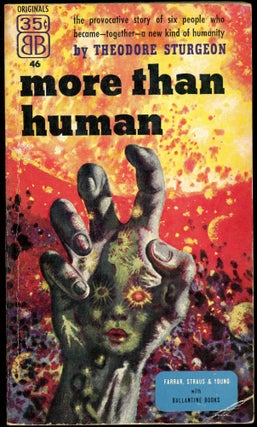
MORE THAN HUMAN.
New York: Farrar, Straus and Young with Ballantine Books, [1955]. Small octavo, pictorial wrappers. First edition. Ballantine 46. Simultaneous with the Farrar, Straus and Young hardbound issue. MORE THAN HUMAN is one of Sturgeon's best and probably his best-known novel. The story expresses a recurrent theme in the author's work: the passage of a character (or, in this case, six of them) from freak to superman, a passage of self-discovery and self-realization, if not apotheosis. In this story, the six outcasts come together to form a more-than-human collective psyche. It is told with the author's characteristic depth of emotional resonance. "Growing out of the acclaimed novella, 'Baby is Three," this excellent work describes the rise, against all meanness and bigotries of the surrounding world, of Homo Gestalt, an individual composed of the blended intelligences of numerous people, each of whom retains personal identity while contributing a particular strength or talent to the whole. An emergence-of-the-superhuman story, made more of a struggle than it was for the superchildren in Clarke's CHILDHOOD'S END (1953), but shorn also of the inevitable tragedy forecast for the superhumans in Stapledon's ODD JOHN (1935)." - Anatomy of Wonder (2004) II-1100. Winner of the 1954 International Fantasy Award for best novel. [Reference: Bleiler, The Guide to Supernatural Fiction 1560].

MORE THAN HUMAN.
New York: Farrar, Straus & Young, 1953. Octavo, quarter cloth with boards. First edition. Winner of the 1954 International Fantasy Award for best novel. "...this excellent work describes the rise, against all meanness and bigotry's of the surrounding world, of Homo Gestalt, an individual composed of the blended intelligence's of numerous peoples, each of whom retains personal identity while contributing a particular strength or talent to the whole. An emergence-of-the-superhuman story..." Anatomy of Wonder (2004) II-1100. [Reference: Pringle, Science Fiction: The 100 Best Novels 14].
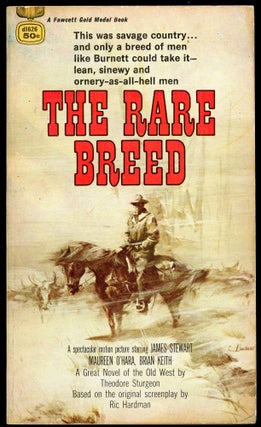
THE RARE BREED.
Greenwich, CT: Fawcett Publications, Inc., [1966]. Small octavo, pictorial wrappers. First edition. Fawcett Gold Medal d1626. Paperback original. Novelization of the screenplay of the 1966 film.