
Results
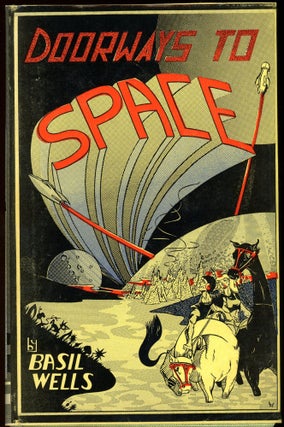
DOORWAYS TO SPACE.
Los Angeles: Fantasy Publishing Company, Inc., [1951]. Octavo, original greenish-yellow cloth, spine stamped in gold. First edition. Collects fifteen short stories. The author's second collection of fiction.
28 SCIENCE FICTION STORIES...
[New York]: Dover Publications, Inc., [1952]. Octavo, cloth. First edition. Reprint collection selected by Groff Conklin, including two novels, Star Begotten (1937) and Men Like Gods (1923), and twenty-six novelettes and short stories, including "The Empire of the Ants," "The Country of the Blind," "The Crystal Egg," and "The Valley of the Spiders." [Reference: Bleiler, Science-Fiction: The Early Years 2351].

THE FIRST MEN IN THE MOON ...
London: George Newnes, Limited, 1901. Octavo, pp. [i-iv] v-vii [viii] [1] 2-342 [343-344: blank] [note: final leaf is a blank], twelve inserted plates with illustrations by Claude Shepperson, original decorated blue cloth, front and spine panels stamped in gold, black coated endpapers. First edition. The U.S. Bowen-Merrill edition preceded the British edition by approximately one month. The two editions have minor textual differences. "...a gripping adventure story as well as a historic milestone in modern science fiction." - Survey of Science Fiction Literature II, pp. 782-86. "The last and most complex [of Wells's early scientific romances] is THE FIRST MEN IN THE MOON. The two first men, Bedford and Cavor are well-contrasted, the civilization of the Selenites is excellent both as horror and satire; and the novel abounds with wonderful passages of unforced description at which Wells is unrivaled... This lovely book also contains much of Wells's delightful humor; it has kept the joints of his discourse oiled to this day. After THE FIRST MEN IN THE MOON, Wells's science fiction novels are never quite the same." - Bleiler (ed), Science Fiction Writers, p. 28. [Reference: Anatomy of Wonder (1976) 2-166; (1981) 1-175; (1987) 1-98; (1995) 1-98; and (2004) II-1225. Bleiler, Science-Fiction: The Early Years 2335. Clareson, Science Fiction in America, 1870s-1930s 795. Lewis, Utopian Literature, p. 206. Locke, A Spectrum of Fantasy, p. 226. Locke, Voyages in Space 208. Negley, Utopian Literature: A Bibliography 1177. Sargent, British and American Utopian Literature, 1516-1985, pp. 123-24. In 333. Bleiler (1978), p. 205. Reginald 15026. Currey, p. 518 (binding A). Hammond B7. Wells 18. Wells Society 18].
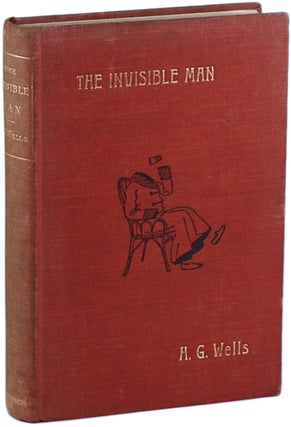
THE INVISIBLE MAN: A GROTESQUE ROMANCE ...
London: C. Arthur Pearson Limited, 1897. Octavo, pp. [i-vi] vii-viii [1] 2-245 [246: printer's imprint] [247-248: ads] [note: first leaf is a blank preceding half title leaf], title page printed in orange and black, original pictorial red cloth, front panel stamped in black and gold, spine panel stamped in gold. First edition. "Amoral scientist discovers invisibility, but even this fails in the face of invincible obtuseness and cruelty of petty bourgeois England. Brilliant idea, memorable scenes, and vigorous chase-plot in an ambiguous (and scientifically impossible) tale." - Suvin, Victorian Science Fiction in the UK, p. 70. Adapted into several films and television shows. [Reference: Anatomy of Wonder (1976) 2-163. Bleiler, Science-Fiction: The Early Years 2330. Clareson, Science Fiction in America, 1870s-1930s 797. Locke, A Spectrum of Fantasy, p. 226. Survey of Science Fiction Literature III, pp. 1057-61. In 333. Bleiler (1978), p. 205. Reginald 15039. Currey, p. 520. Hammond B4. Wells 11. Wells Society 11].
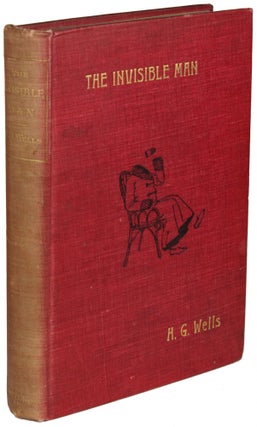
THE INVISIBLE MAN: A GROTESQUE ROMANCE ...
London: C. Arthur Pearson Limited, 1897. Octavo, pp. [i-vi] vii-viii [1] 2-245 [246: printer's imprint] [247-248: ads] [note: first leaf is a blank preceding half title leaf], title page printed in orange and black, original pictorial red cloth, front panel stamped in black and gold, spine panel stamped in gold. First edition. "Amoral scientist discovers invisibility, but even this fails in the face of invincible obtuseness and cruelty of petty bourgeois England. Brilliant idea, memorable scenes, and vigorous chase-plot in an ambiguous (and scientifically impossible) tale." - Suvin, Victorian Science Fiction in the UK, p. 70. Filmed in 1933 by Universal Pictures starring Claude Rains, directed by James Whale. [Reference: Anatomy of Wonder (1976) 2-163 and (2004) II-1227. Bleiler, Science-Fiction: The Early Years 2330. Clareson, Science Fiction in America, 1870s-1930s 797. Locke, A Spectrum of Fantasy, p. 226. Survey of Science Fiction Literature III, pp. 1057-61. In 333. Bleiler (1978), p. 205. Reginald 15039. Currey, p. 520. Hammond B4. Wells 11. Wells Society 11].

THE INVISIBLE MAN: A GROTESQUE ROMANCE ...
London: C. Arthur Pearson Limited, 1897. Octavo, pp. [i-vi] vii-viii [1] 2-245 [246: printer's imprint] [247-248: ads] [note: first leaf is a blank preceding half title leaf], title page printed in orange and black, original pictorial red cloth, front panel stamped in black and gold, spine panel stamped in gold. First edition. "Amoral scientist discovers invisibility, but even this fails in the face of invincible obtuseness and cruelty of petty bourgeois England. Brilliant idea, memorable scenes, and vigorous chase-plot in an ambiguous (and scientifically impossible) tale." - Suvin, Victorian Science Fiction in the UK, p. 70. Filmed in 1933 by Universal Pictures starring Claude Rains, directed by James Whale. [Reference: Anatomy of Wonder (1976) 2-163 and (2004) II-1227. Bleiler, Science-Fiction: The Early Years 2330. Clareson, Science Fiction in America, 1870s-1930s 797. Locke, A Spectrum of Fantasy, p. 226. Survey of Science Fiction Literature III, pp. 1057-61. In 333. Bleiler (1978), p. 205. Reginald 15039. Currey, p. 520. Hammond B4. Wells 11. Wells Society 11].

THE ISLAND OF DOCTOR MOREAU ...
London: William Heinemann, 1896. Octavo, pp. [1-2] [i-v] vi-vii [viii-ix] x [1] 2-219 [220: blank] [221: note] [222: printer's imprint] [223: ad (for the TIME MACHINE)] [224: blank] [note: leaf preceding half title leaf is a blank] + [32]-page publisher's catalogue inserted at rear, inserted frontispiece (tissue guard present), original pictorial light brown cloth, front panel stamped in red and black, spine panel stamped in black, publisher's monogram stamped in blind on rear panel, top and bottom edges rough cut, fore-edge rough cut. First edition. First binding with publisher's monogram in blind on rear cover. 32-page catalogue with page [1] headed "The Manxman" inserted at rear. "The most Swiftian -- and the most sustained -- of all Wells's science fiction satires ..." - Survey of Science Fiction Literature III, p. 1079-83. [Reference: Anatomy of Wonder (1976) 2-162; (1981) 1-172; (1987) 1-100; (1995) 1-100; and (2004) II-1228. Bleiler, Science-Fiction: The Early Years 2327. Clareson, Science Fiction in America, 1870s-1930s 798. Jones and Newman (eds), Horror: 100 Best Books 20. Locke, A Spectrum of Fantasy, p. 226. Suvin, Victorian Science Fiction in the UK, p. 66. In 333. Bleiler (1978), p. 205. Reginald 15043. Currey, p. 520 (binding A., catalogue 2 [no priority established]). Hammond B3. Wells 7. Wells Society 8].

THE PLATTNER STORY AND OTHERS.
London: Methuen & Co., 1897. Octavo, pp. [i-vi] vii [1] 2-301 [302: printer's imprint [303-304: blank] [note: last leaf is a blank; half title and title leaves are a conjugate pair and are inserted] + 40-page publisher's catalogue dated "March 1897" inserted at rear, original red cloth, front and spine panels stamped in gold, all edges untrimmed. First edition. One of Wells's more uncommon books, this collection includes many of his best SF and fantasy tales. [Reference: Barron (ed), Fantasy Literature 2-154. Bleiler, The Guide to Supernatural Fiction 1676. Bleiler, Science-Fiction: The Early Years 2328. Locke, A Spectrum of Fantasy, p. 227. Suvin, Victorian Science Fiction in the UK, p. 70. Tymn (ed), Horror Literature 3-245. Bleiler (1978), p. 205. Reginald 15056. Currey, p. 522. Hammond C2. Wells 10. Wells Society 10].

THE PLATTNER STORY AND OTHERS.
London: Methuen & Co., 1897. Octavo, pp. [i-vi] vii [1] 2-301 [302: printer's imprint [303-304: blank] [note: last leaf is a blank; half title and title leaves are a conjugate pair and are inserted] + 40-page publisher's catalogue dated "March 1897" inserted at rear, original red cloth, front and spine panels stamped in gold, all edges untrimmed. First edition. One of Wells's more uncommon books, this collection includes many of his best SF and fantasy tales. [Reference: Barron (ed), Fantasy Literature 2-154. Bleiler, The Guide to Supernatural Fiction 1676. Bleiler, Science-Fiction: The Early Years 2328. Locke, A Spectrum of Fantasy, p. 227. Suvin, Victorian Science Fiction in the UK, p. 70. Tymn (ed), Horror Literature 3-245. Bleiler (1978), p. 205. Reginald 15056. Currey, p. 522. Hammond C2. Wells 10. Wells Society 10].

THE STOLEN BACILLUS AND OTHER INCIDENTS ...
London: Methuen & Co., 1895. Octavo, pp. [1-12] [1] 2-275 [276: printer's imprint] [note: first leaf is a blank] + 32-page publisher's catalogue dated "September 1895" inserted at rear, original decorated blue cloth, front and spine panels stamped in gold, all edges untrimmed. First edition. Wells' first published collection of fantasy and SF stories, all written and printed in magazines between 1893 and 1895. Some of the tales "possess, on a smaller scale, something of the imaginative distinction which had marked THE TIME MACHINE." - Bergonzi, The Early H. G. Wells, p. 63. [Reference: Bleiler, The Guide to Supernatural Fiction 1674. Bleiler, Science-Fiction: The Early Years 2326. Locke, A Spectrum of Fantasy Volume II, p. 115. Suvin, Victorian Science Fiction in the UK, p. 62. Tymn (ed), Horror Literature 3-246. Bleiler (1978), p. 205. Reginald 15074. Currey, p. 523. Wells 6. Wells Society 6. Hammond C1].

THE STOLEN BACILLUS AND OTHER INCIDENTS.
London: Methuen & Co., 1895. Octavo, pp. [1-12] [1] 2-275 [276: printer's imprint] [note: first leaf is a blank], original decorated blue cloth, front and spine panels stamped in gold, all edges untrimmed. First edition. Variant with no publisher's catalogue inserted at rear. Wells' first published collection of fantasy and SF stories, all written and printed in magazines between 1893 and 1895. Some of the tales "possess, on a smaller scale, something of the imaginative distinction which had marked THE TIME MACHINE." - Bergonzi, The Early H. G. Wells, p. 63. [Reference: Bleiler, The Guide to Supernatural Fiction 1674. Bleiler, Science-Fiction: The Early Years 2326. Locke, A Spectrum of Fantasy Volume II, p. 115. Suvin, Victorian Science Fiction in the UK, p. 62. Tymn (ed), Horror Literature 3-246. Bleiler (1978), p. 205. Reginald 15074. Currey, p. 523. Wells 6. Wells Society 6. Hammond C1].
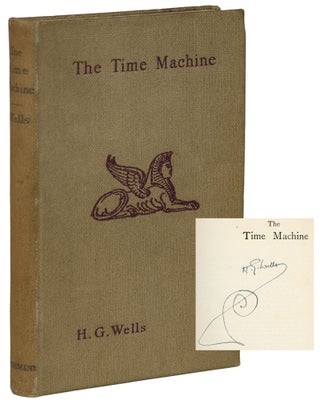
THE TIME MACHINE: AN INVENTION ...
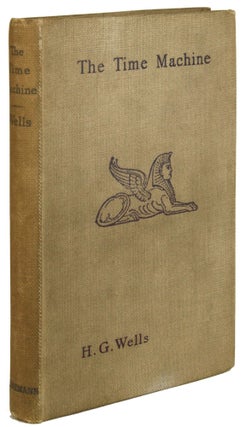
London: William Heinemann, 1895. Small octavo, pp. [1-8] 1-151 [152], original decorated tan cloth, front and rear panels stamped in purple, spine panel stamped in light blue; binding measures 18.2 cm vertically; "HEINEMANN" at base of spine set in 12-point type; top edge uncut, fore and bottom edges rough trimmed. First British edition, second cloth binding, no inserted publisher's catalogue. Signed by Wells on the half title page. The author's first SF novel. "Many rank it as Wells's best book, certainly its qualities are striking and direct ... All time-travel stories since owe a debt to Wells, none has become so acclaimed." - Bleiler (ed), Science Fiction Writers, p. 26. "THE TIME MACHINE might be considered the first work of modern science-fiction, and it is still the classic statement of an important subgenre ... A remarkable work, and necessary reading." - Bleiler, Science-Fiction: The Early Years 2325. [Reference: Anatomy of Wonder (1976) 2-161; (1981) 1-171; (1987) 1-103; (1995) 1-103; and (2004) II-1232. Clareson, Science Fiction in America, 1870s-1930s 800. Clarke, Tale of the Future (1978), p. 21. Lewis, Utopian Literature, p. 207. Locke, A Spectrum of Fantasy, p. 227. Negley, Utopian Literature: A Bibliography 1175. Sargent, British and American Utopian Literature, 1516-1985, p. 107. Survey of Science Fiction Literature V, pp. 2287-92. Suvin, Victorian Science Fiction in the UK, pp. 62-3. Bleiler (1978), p. 205. Reginald 15085. Currey (2002), p. 424 (binding C). Hammond B1. Wells 4].
THE TIME MACHINE: AN INVENTION ...
London: William Heinemann, 1895. Small octavo, pp. [1-8] 1-151 [152] + [16]-page publisher's catalogue with first page headed "THE MANXMAN" inserted at rear, original decorated tan buckram, front and spine panels stamped in purple, publisher's monogram stamped in purple on rear panel, top and fore edges untrimmed, bottom edge rough trimmed. First British edition, first binding, earliest form of inserted publisher's catalogue. Laid in is a card with a short note written and signed by Wells in his hand to MacKenzie Bell, literary editor, regarding George Gissing, a good friend of Wells. The author's first SF novel. "Many rank it as Wells's best book, certainly its qualities are striking and direct ... All time-travel stories since owe a debt to Wells, none has become so acclaimed." - Bleiler (ed), Science Fiction Writers, p. 26. "THE TIME MACHINE might be considered the first work of modern science-fiction, and it is still the classic statement of an important subgenre ... A remarkable work, and necessary reading." - Bleiler, Science-Fiction: The Early Years 2325. The Heinemann edition is preceded by the U.S. Holt edition, which has a different text, presumably from an earlier version of the story, this edition is considered the better text. [Reference: Anatomy of Wonder (1976) 2-161; (1981) 1-171; (1987) 1-103; (1995) 1-103; and (2004) II-1232. Clareson, Science Fiction in America, 1870s-1930s 800. Clarke, Tale of the Future (1978), p. 21. Lewis, Utopian Literature, p. 207. Locke, A Spectrum of Fantasy, p. 227. Negley, Utopian Literature: A Bibliography 1175. Sargent, British and American Utopian Literature, 1516-1985, p. 107. Survey of Science Fiction Literature V, pp. 2287-92. Suvin, Victorian Science Fiction in the UK, pp. 62-3. Bleiler (1978), p. 205. Reginald 15085. Currey, p. 525 (binding B, catalogue 1). Hammond B1. Wells 4. Wolff 7107].
THE TIME MACHINE: AN INVENTION.
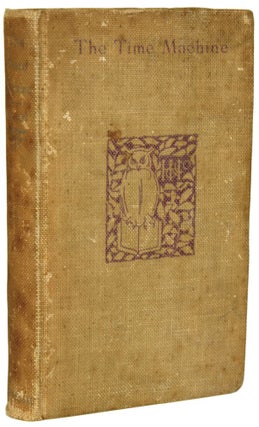
New York: Henry Holt and Company, 1895. Small octavo, inserted frontispiece (with tissue guard) with illustration by W. B. Russell, original decorated tan buckram, front and spine panels stamped in purple, t.e.g., other edges untrimmed. First edition, first printing with author's name incorrectly printed as "H. S. WELLS" on recto of title leaf. The earliest draft of THE TIME MACHINE was serialized in THE SCIENCE SCHOOLS JOURNAL in 1888 as "The Chronic Argonauts." After two subsequent drafts (which are lost), Wells rewrote the story as a series of loosely connected articles for THE NATIONAL OBSERVER. Seven of these appeared between March and June 1894, but the series was discontinued when W. E. Henley gave up the editorship of the magazine. Henley took over the editorship of THE NEW REVIEW and arranged for a much revised version of the novel to be serialized there: it appeared in five installments from January to May 1895. At the end of May THE TIME MACHINE was published as a book by Henry Holt in New York and William Heinemann in London. The text of the Heinemann edition is largely, though not entirely, the same as that serialized in THE NEW REVIEW, while the text of Holt edition (which preceded the Heinemann edition) contains a number of significant variations from both THE NEW REVIEW and Heinemann versions. See Bergonzi, "The Publication of The Time Machine, 1894-1895," Clareson, ed., SF: The Other Side of Realism (1971), pp. 204-15. The author's first SF novel. "Many rank it as Wells's best book, certainly its qualities are striking and direct ... All time-travel stories since owe a debt to Wells, none has become so acclaimed." - Bleiler (ed), Science Fiction Writers, p. 26. "THE TIME MACHINE might be considered the first work of modern science-fiction, and it is still the classic statement of an important subgenre ... A remarkable work, and necessary reading." - Bleiler, Science-Fiction: The Early Years 2325. Filmed twice, first in 1960 and again in 2002. [Reference: Anatomy of Wonder (1976) 2-161; (1981) 1-171; (1987) 1-103; (1995) 1-103; and (2004) II-1232. Clareson, Science Fiction in America, 1870s-1930s 800. Clarke, Tale of the Future (1978), p. 21. Lewis, Utopian Literature, p. 207. Locke, A Spectrum of Fantasy, p. 227. Negley, Utopian Literature: A Bibliography 1175. Sargent, British and American Utopian Literature, 1516-1985, p. 107. Survey of Science Fiction Literature V, pp. 2287-92. Suvin, Victorian Science Fiction in the UK, pp. 62-3. Bleiler (1978), p. 205. Reginald 15085. Currey, p. 524 (printing A). Hammond B1 (note)].

THE TIME MACHINE: AN INVENTION.
New York: Henry Holt and Company, 1895. Small octavo, inserted frontispiece (with tissue guard) with illustration by W. B. Russell, original decorated tan buckram, front and spine panels stamped in purple, t.e.g., other edges untrimmed. First edition, first printing with author's name incorrectly printed as "H. S. WELLS" on recto of title leaf. The earliest draft of THE TIME MACHINE was serialized in THE SCIENCE SCHOOLS JOURNAL in 1888 as "The Chronic Argonauts." After two subsequent drafts (which are lost), Wells rewrote the story as a series of loosely connected articles for THE NATIONAL OBSERVER. Seven of these appeared between March and June 1894, but the series was discontinued when W. E. Henley gave up the editorship of the magazine. Henley took over the editorship of THE NEW REVIEW and arranged for a much revised version of the novel to be serialized there: it appeared in five installments from January to May 1895. At the end of May THE TIME MACHINE was published as a book by Henry Holt in New York and William Heinemann in London. The text of the Heinemann edition is largely, though not entirely, the same as that serialized in THE NEW REVIEW, while the text of Holt edition (which preceded the Heinemann edition) contains a number of significant variations from both THE NEW REVIEW and Heinemann versions. See Bergonzi, "The Publication of The Time Machine, 1894-1895," Clareson, ed., SF: The Other Side of Realism (1971), pp. 204-15. The author's first SF novel. "Many rank it as Wells's best book, certainly its qualities are striking and direct ... All time-travel stories since owe a debt to Wells, none has become so acclaimed." - Bleiler (ed), Science Fiction Writers, p. 26. "THE TIME MACHINE might be considered the first work of modern science-fiction, and it is still the classic statement of an important subgenre ... A remarkable work, and necessary reading." - Bleiler, Science-Fiction: The Early Years 2325. Filmed twice, first in 1960 and again in 2002. [Reference: Anatomy of Wonder (1976) 2-161; (1981) 1-171; (1987) 1-103; (1995) 1-103; and (2004) II-1232. Clareson, Science Fiction in America, 1870s-1930s 800. Clarke, Tale of the Future (1978), p. 21. Lewis, Utopian Literature, p. 207. Locke, A Spectrum of Fantasy, p. 227. Negley, Utopian Literature: A Bibliography 1175. Sargent, British and American Utopian Literature, 1516-1985, p. 107. Survey of Science Fiction Literature V, pp. 2287-92. Suvin, Victorian Science Fiction in the UK, pp. 62-3. Bleiler (1978), p. 205. Reginald 15085. Currey, p. 524 (printing A). Hammond B1 (note)].

TWELVE STORIES AND A DREAM.
London: Macmillan and Co., Limited / New York: The Macmillan Company, 1903. Octavo, pp. [1-8] [1-2] 3-377 [378: blank] [379-384: ads] + 16-page publisher's catalogue dated "20.9.03" at base of page [16] inserted at rear, original decorated green cloth, front panel stamped in gold and blind, spine panel stamped in gold, t.e.g. First edition. A collection of thirteen science fiction and fantasy stories including "Filmer," one of Wells's finest stories, "The Valley of the Spiders," "The Inexperienced Ghost," "The New Accelerator," The Stolen Body," and "A Dream of Armageddon." [Reference: Bleiler, The Guide to Supernatural Fiction 1680. Bleiler, Science-Fiction: The Early Years 2336. Clarke, Tale of the Future (1978), p. 29. Locke, A Spectrum of Fantasy, p. 227. Survey of Science Fiction Literature IV, pp. 1967-72. Tymn (ed), Horror Literature 3-248. Bleiler (1978), p. 205. Reginald 15097. Currey, p. 526. Hammond C5. Wells 23. Wells Society 23].

TWELVE STORIES AND A DREAM.
London: Macmillan and Co., Limited / New York: The Macmillan Company, 1903. Octavo, pp. [1-8] [1-2] 3-377 [378: blank] [379-384: ads] + 16-page publisher's catalogue dated "20.9.03" at base of page [16] inserted at rear, original decorated green cloth, front panel stamped in gold and blind, spine panel stamped in gold, t.e.g. First edition. A collection of thirteen science fiction and fantasy stories including "Filmer," one of Wells's finest stories, "The Valley of the Spiders," "The Inexperienced Ghost," "The New Accelerator," The Stolen Body," and "A Dream of Armageddon." [Reference: Bleiler, The Guide to Supernatural Fiction 1680. Bleiler, Science-Fiction: The Early Years 2336. Clarke, Tale of the Future (1978), p. 29. Locke, A Spectrum of Fantasy, p. 227. Survey of Science Fiction Literature IV, pp. 1967-72. Tymn (ed), Horror Literature 3-248. Bleiler (1978), p. 205. Reginald 15097. Currey, p. 526. Hammond C5. Wells 23. Wells Society 23].

THE WAR IN THE AIR AND PARTICULARLY HOW MR. BERT SMALLWAYS FARED WHILE IT LASTED ...
London: George Bell and Sons, 1908. Octavo, pp. [i-iv] v [vi] vii [viii] [1] 2-389 [390: printer's imprint] [391-392: ads], sixteen inserted plates with illustrations by A. C. Michael, original blue cloth, front and spine panels stamped in gold. First edition, first binding with all lettering and decoration on front and spine panels in gold and "George Bell & Sons" at base of spine panel. THE WAR IN THE AIR "is a remarkable rarity in being a future war novel which uses the viewpoint of ordinary people and deals primarily with the effects of aerial warfare on those ordinary people ... the shape of Wells's argument brings him to a conclusion very different from that characteristic of the future war novels written before 1914: civilization is virtually obliterated, and the Scientific Age is brought to an end." - Stableford, Scientific Romance in Britain 1890-1950, p. 72. Kingsley Amis (New Maps of Hell) terms this novel the "most forceful" of Wells's scientific romances. [Reference: Anatomy of Wonder (1976) 2-170; (1981) 1-178; (1987) 1-104; (1995) 104; and (2004) II-1233. Bleiler, Science-Fiction: The Early Years 2339. Clareson, Science Fiction in America, 1870s-1930s 801. Clarke, Tale of the Future (1978), p. 36. Clarke, Voices Prophesying War 1763-1984, p. 236. Gerber, Utopian Fantasy (1973), p. 145. Locke, A Spectrum of Fantasy, pp. 227-28. Negley, Utopian Literature: A Bibliography 1179. Survey of Science Fiction Literature V, pp. 2407-10. Bleiler (1978), p. 205. Reginald 15106. Currey (2002), p. 425 (binding A). Hammond B11. Wells 35. Wells Society 36].

WHEN THE SLEEPER WAKES ...
London and New York: Harper & Brothers Publishers, 1899. Octavo, pp. [1-8] [1] 2-328 [329] [330-332: blank] [note final leaf is a blank], three inserted plates with illustrations by H. Lanos, original red cloth, front and spine panel stamped in gold. First edition. According to Wells, this novel depicts "our contemporary world in a state of highly inflamed distention." "Whatever actual future history may unfold, the shadow of Wells's frightening visions has lain dark over the most influential current science fiction for nearly a century ... its disturbing images recur again and again ... WE ... BRAVE NEW WORLD ... NINETEEN EIGHTY-FOUR, and in the whole tide of nightmare fiction that followed Hiroshima." - Survey of Science Fiction Literature V, pp. 2459-62. "... a vividly exciting story." - Bleiler (ed), Science Fiction Writers, p. 27. [Reference: Anatomy of Wonder (1976) 2-165; (1981) 1-174; (1987) 1-106; (1995) 1-106; and (2004) II-1235. Bleiler, Science-Fiction: The Early Years 2332. Clareson, Science Fiction in America, 1870s-1930s 803. Clarke, Tale of the Future (1978), p. 25. Lewis, Utopian Literature, p. 202. Locke, A Spectrum of Fantasy, p. 228. Negley, Utopian Literature: A Bibliography 1176. Sargent, British and American Utopian Literature, 1516-1985, p. 120. Suvin, Victorian Science Fiction in the UK, p. 78. Bleiler (1978), p. 205. Reginald 15114. Currey (2002), p. 426 (binding A). Hammond B6. Wells 15. Wells Society 15].

ALL SYSTEMS RED.
New York: [TOR, 2017]. Octavo, pictorial wrappers. First edition. Signed by Wells on the title page. A novella, the first in the Murderbot Diaries series. This was nominated for numerous awards and the winner of the Hugo, Nebula and Locus Awards for best novella.