
Results
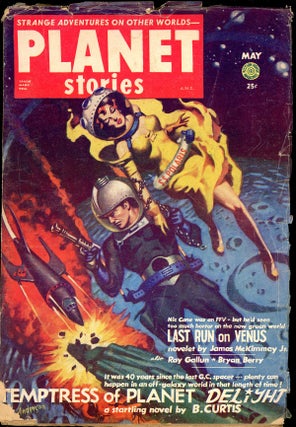
PLANET STORIES.
New York: Love Romances, 1953. Octavo, single issue, cover by Anderson, pictorial wrappers. Pulp magazine. Includes "The Infinites" by Philip K. Dick (his third appearance in Planet). Unabashedly the magazine was a proponent of "space-opera." In Leigh Brackett's introduction in the anthology THE BEST OF PLANET STORIES (1974) she states "the so-called space opera is the folk-tale, the hero-tale of our particular niche in history." [Reference: Tymm and Ashley, Science Fiction, Fantasy, and Weird Fiction Magazines, pp. 476-481].
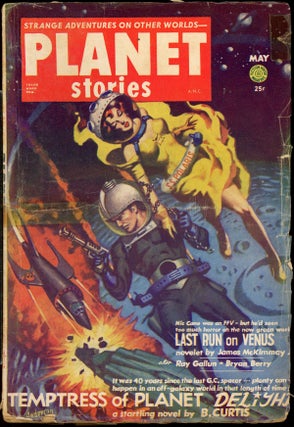
PLANET STORIES.
New York: Love Romances, 1953. Octavo, single issue, cover by Anderson, pictorial wrappers. Pulp magazine. Includes "The Infinites" by Philip K. Dick (his third appearance in Planet). Unabashedly the magazine was a proponent of "space-opera." In Leigh Brackett's introduction in the anthology THE BEST OF PLANET STORIES (1974) she states "the so-called space opera is the folk-tale, the hero-tale of our particular niche in history." [Reference: Tymm and Ashley, Science Fiction, Fantasy, and Weird Fiction Magazines, pp. 476-481].
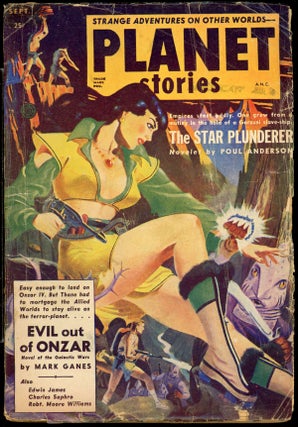
PLANET STORIES.
New York: Love Romances, 1952. Octavo, single issue, cover by Vestal, pictorial wrappers. Pulp magazine. Incudes Philip K. Dick"s second professionally published story, "The Gun." Unabashedly the magazine was a proponent of "space-opera." In Leigh Brackett's introduction in the anthology THE BEST OF PLANET STORIES (1974) she states "the so-called space opera is the folk-tale, the hero-tale of our particular niche in history." [Reference: Tymm and Ashley, Science Fiction, Fantasy, and Weird Fiction Magazines, pp. 476-481].
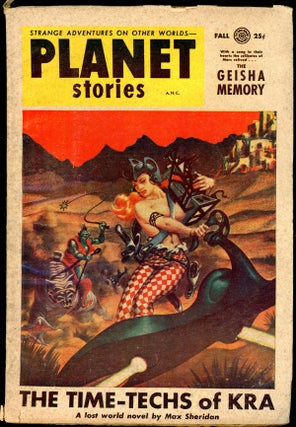
PLANET STORIES.
New York: Love Romances, 1954. Octavo, single issue, cover by Freas, pictorial wrappers. Pulp magazine. Includes fiction by Robert Sheckley. Unabashedly the magazine was a proponent of "space-opera." In Leigh Brackett's introduction in the anthology THE BEST OF PLANET STORIES (1974) she states "the so-called space opera is the folk-tale, the hero-tale of our particular niche in history." [Reference: Tymm and Ashley, Science Fiction, Fantasy, and Weird Fiction Magazines, pp. 476-481].
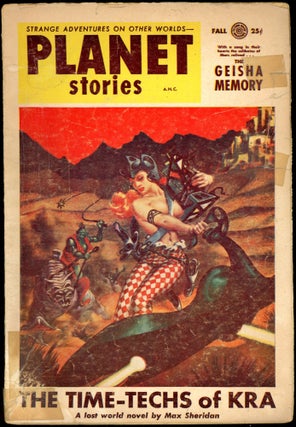
PLANET STORIES.
New York: Love Romances, 1954. Octavo, single issue, cover by Freas, pictorial wrappers. Pulp magazine. Includes fiction by Robert Sheckley. Unabashedly the magazine was a proponent of "space-opera." In Leigh Brackett's introduction in the anthology THE BEST OF PLANET STORIES (1974) she states "the so-called space opera is the folk-tale, the hero-tale of our particular niche in history." [Reference: Tymm and Ashley, Science Fiction, Fantasy, and Weird Fiction Magazines, pp. 476-481].
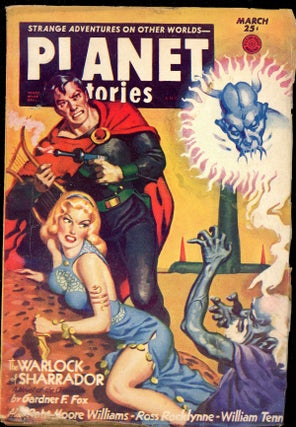
PLANET STORIES.
New York: Love Romances, 1953. Octavo, single issue, cover by Anderson, pictorial wrappers. Pulp magazine. Unabashedly the magazine was a proponent of "space-opera." In Leigh Brackett's introduction in the anthology THE BEST OF PLANET STORIES (1974) she states "the so-called space opera is the folk-tale, the hero-tale of our particular niche in history." [Reference: Tymm and Ashley, Science Fiction, Fantasy, and Weird Fiction Magazines, pp. 476-481].
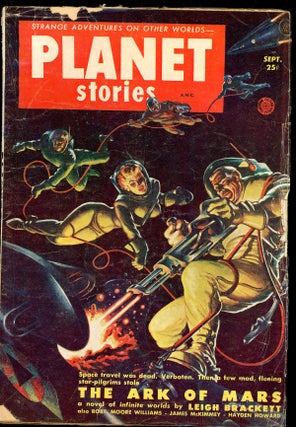
PLANET STORIES.
New York: Love Romances, 1953. Octavo, single issue, cover by Freas, pictorial wrappers. Pulp magazine. Includes a Leigh Brackett story. Unabashedly the magazine was a proponent of "space-opera." In Leigh Brackett's introduction in the anthology THE BEST OF PLANET STORIES (1974) she states "the so-called space opera is the folk-tale, the hero-tale of our particular niche in history." [Reference: Tymm and Ashley, Science Fiction, Fantasy, and Weird Fiction Magazines, pp. 476-481].
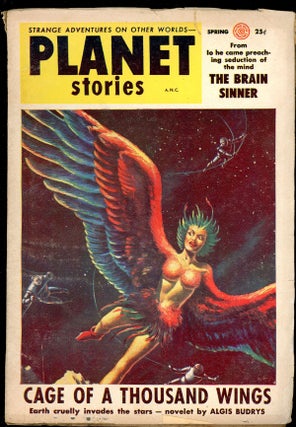
PLANET STORIES.
New York: Love Romances, 1955. Octavo, single issue, cover by Freas. pictorial wrappers. Pulp magazine. Includes fiction by Algis Budrys, Poul Anderson and others. Unabashedly the magazine was a proponent of "space-opera." In Leigh Brackett's introduction in the anthology THE BEST OF PLANET STORIES (1974) she states "the so-called space opera is the folk-tale, the hero-tale of our particular niche in history." [Reference: Tymm and Ashley, Science Fiction, Fantasy, and Weird Fiction Magazines, pp. 476-481].
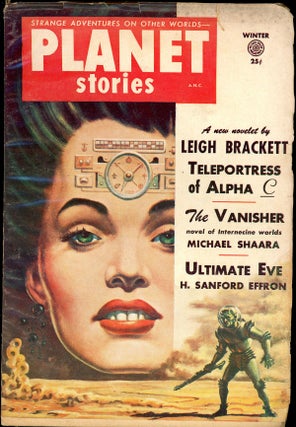
PLANET STORIES.
New York: Love Romances, 1954. Octavo, single issue, cover by Freas (mistakenly credited to Algis Budrys), pictorial wrappers. Pulp magazine. Includes a Leigh Brackett story as well as early fiction by Michael Shaara (who would write THE KILLER ANGELS). Unabashedly the magazine was a proponent of "space-opera." In Leigh Brackett's introduction in the anthology THE BEST OF PLANET STORIES (1974) she states "the so-called space opera is the folk-tale, the hero-tale of our particular niche in history." [Reference: Tymm and Ashley, Science Fiction, Fantasy, and Weird Fiction Magazines, pp. 476-481].