
Film & TV source books
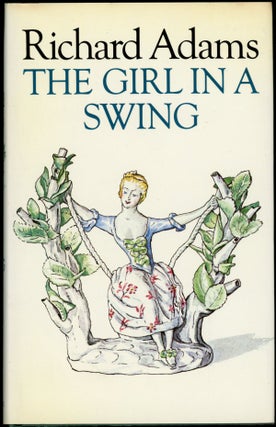
THE GIRL IN A SWING (Two copies).
[London]: Allen Lane, [1980]. Octavo, boards. First edition. First printing with "Allen Lane" on the title page and with the main female character named Käthe. After they are married a couple have haunting and supernatural experiences related to the wife's past. "... the story is sustained by a rich backdrop of art, culture, and religion in which hints of the couple's impending tragedy are continually glimpsed. A surprising mature horror tale from an author best known for his animal fantasy epics..." - Barron (ed), Fantasy and Horror 6-2. - Barron (ed), Fantasy and Horror 6-2. Filmed in 1988 with Meg Tilly.
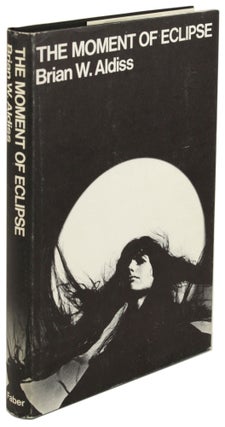
THE MOMENT OF THE ECLIPSE.
London: Faber and Faber:, [1970]. Octavo, cloth. First edition. Collects fourteen stories. Includes "Super-Toys Last All Summer Long," basis for the 2001 Steven Spielberg film A.I. Artificial Intelligence. "Fourteen subtle tales, some comic, some sombre, all highly original. Some of these are late-60s New Wave SF at its best." - Pringle, The Ultimate Guide to Science Fiction, second edition (1995), pp. 242-243. Winner of a 1972 British Science Fiction Association Award. [Reference: Anatomy of Wonder (1995) 4-3].
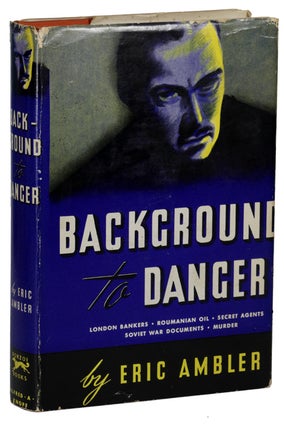
BACKGROUND TO DANGER.
New York: Alfred A. Knopf, 1937. Octavo, cloth. First U.S. edition. Espionage thriller involving military secrets, Soviet agents, German agents and Rumanian oil. Filmed in 1943, directed by Raoul Walsh with George Raft, Sidney Greenstreet, Peter Lorre and Turhan Bey from a script by W.R. Burnett.
THE MASK OF DIMITRIOS.
London: Hodder and Stoughton Limited, [1939]. Octavo, pp. [1-8] 9-319 [320]. cloth. First edition. Published in the U.K. as The Mask of Dimitrios. A Haycraft-Queen cornerstone volume. Made into a 1944 film featuring Sydney Greenstreet and Peter Lorre, screenplay credit to Frank Gruber.

THE EGYPTOLOGISTS.
London: Jonathan Cape, [1965]. Octavo, boards. First edition. Farcical novel of a secret society. "The Egyptologists are the members of the Metropolitan Egyptological Society housed in London, and just what goes on or comes off in the Isis Room is not revealed until the end of this long legpull. It is also withheld from their wives who, in boredom, form a solid bloc; but when they are summoned by the Yard (the Superintendent insists on admission), threatened with the visitation of an outsider and a public viewing on television, it all becomes sufficiently Pharanoid to result in their dissolution. "We're twee; you see. We know so well that what we're up to is the least twee of human activities..." Well, you can skip the hieroglyphic twee and settle down to being twitted with some aimless nonsense. Most of the characters are faceless but one of them could be Peter Sellers." - Kirkus Review, February, 1965. Filmed as a made for TV Czech movie.

THIEVES LIKE US ...
London, Toronto: William Heinemann Ltd, [1937]. Octavo pp. [1-2: blank] [3-10] 1-286, publisher's green cloth stamp in brown, tan endpapers. First British edition. The author's second and last novel. Three escaped convicts rob banks. The central character goes on the run with his girlfriend. "Anderson’s second novel crackles with tension and has a very different mood from “Hungry Men” [his first] because the reader understands from the start that these characters are doomed. Hence their romance. The book lives best, not in its sometimes hard-boiled idiom, but in the moments between the action, when the characters are driving around Texas and Oklahoma, or holed up in a safe house or hotel" (Richard Raymer, L. A. Times, 22 June 2008). The title is used memorably by a character in the book, T. Dub Masefield, whose sentiment about bankers is: "They're thieves, just like us" (see p. 15). Film noir source title and basis for a 1949 film directed by Nicholas Ray titled They Live By Night and a later 1974 film directed by Robert Altman titled Thieves Like Us. [Reference: Johnson, The Dark Page I, p. 6. Silver and Ward, eds., Film Noir: An Encyclopedic Reference to the American Style (third edition), pp. 284-285. Selby, Dark City: The Film Noir, p. 187].

THIEVES LIKE US.
New York: Frederick A. Stokes Company, 1937. Octavo, pp. [1-6] 1-314, original light brown cloth, front and spine stamped in black, fore edge untrimmed bottom edge rough trimmed. First edition. The author's second and last novel. Three escaped convicts rob banks. The central character goes on the run with his girlfriend. "Anderson’s second novel crackles with tension and has a very different mood from “Hungry Men” [his first] because the reader understands from the start that these characters are doomed. Hence their romance. The book lives best, not in its sometimes hard-boiled idiom, but in the moments between the action, when the characters are driving around Texas and Oklahoma, or holed up in a safe house or hotel" - L.A. Times article 22 June, 2008 by Richard Raymer. The title is used memorably by a character in the book, T. Dub Masefield, whose sentiment about bankers is: "They're thieves, just like us." (see p. 15). Film noir source title and basis for two films, a 1949 release, directed by Nicholas Ray titled They Live By Night and filmed again by Robert Altman as Thieves Like Us in 1974. [Reference: Johnson, The Dark Page I, p. 6, Silver and Ward (eds.), Film Noir: An Encyclopedic Reference to the American Style (3rd edition), pp. 284-285. Selby, Dark City: The Film Noir, p. 187].
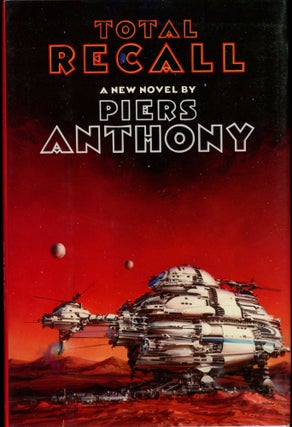
TOTAL RECALL.
New York: William Morrow and Company, Inc., [1989]. Octavo, cloth backed boards. First edition. Novel based on the story "We Can Remember It For You Wholesale" by Philip K. Dick and screen treatment by Ronald Shusett and others. A recreational memory implant of a vacation on Mars places the hapless protagonist in grave danger as his dreams turn into frightening reality.

THE BICENTENNIAL MAN AND OTHER STORIES.
Garden City, NY: Doubleday & Company, Inc., 1976. Octavo, boards. First edition. The title story was the winner of both the Hugo (1977) and Nebula (1977) awards for best novelette. Title story is also the basis for the Robin Williams film. Other artificial intelligence and machine stories present here are "Feminine Intuition," "The Life and Times of Multivac," and "That Thou Art Mindful of Him." [Reference: Anatomy of Wonder (1987) 4-25].
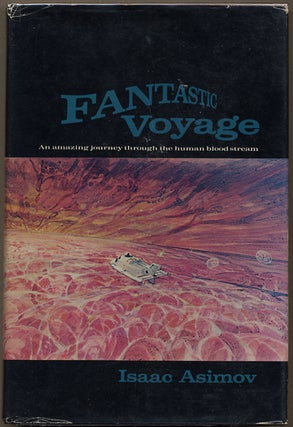
FANTASTIC VOYAGE.
Boston: Houghton Mifflin Company, 1966. Octavo, cloth. First edition. Nebula nominee for 1966. Filmed in 1966 by Richard Fleischer with Stephen Boyd, Raquel Welch, and Donald Pleasance. This is a novelization of the screenplay. [Reference: Anatomy of Wonder (1981) 3-43].

I, ROBOT.
New York: Gnome Press, Inc., Publishers, [1950]. Octavo, cover illustration by Edd Cartier, cloth. First edition. Influential collection of short fiction about robots with first postulation of the "Three Laws of Robotics," a concept used for plots in numerous tales by other writers in subsequent years. Includes "The Evitable Conflict." in which machines that have made the world of the twenty-first century an economic utopia take control of Mankind's future, moving it "toward an unknown and happy destiny." - Berger, Science Fiction and the New Dark Age, pp. 36-7. Loose basis for the recent film of the same title. [Reference: Anatomy of Wonder (2004) II-49. Survey of Science Fiction Literature II, pp. 995-99].

I, ROBOT.
New York: Gnome Press, Inc., Publishers, [1950]. Octavo, cover illustration by Edd Cartier, cloth. First edition. Inscribed and signed by Asimov to an early and longtime fan. "For: / William / Benthake / Hope you like it! / 12/3/50 Isaac Asimov." Also signed by artist Edd Cartier in the book and on the jacket flap. Also signed on the copyright page by Gnome Press co-founder David Kyle; "BILL! / BEST WISHES FROM / THE ORIGINAL GNOME! / Dave Kyle." Bill Benthake (1918-1994) was a longtime fan who attended science fiction conventions and was involved in the Fantasy Amateur Press Association. Certainly, an early published copy with wonderful signatures. Influential collection of short fiction about robots with first postulation of the "Three Laws of Robotics," a concept used for plots in numerous tales by other writers in subsequent years. Includes "The Evitable Conflict." in which machines that have made the world of the twenty-first century an economic utopia take control of Mankind's future, moving it "toward an unknown and happy destiny." - Berger, Science Fiction and the New Dark Age, pp. 36-7. Loose basis for the recent film of the same title. [Reference: Anatomy of Wonder (2004) II-49. Survey of Science Fiction Literature II, pp. 995-99].
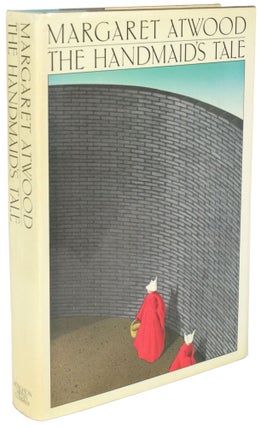
HANDMAID'S TALE.
Boston: Houghton Mifflin Company, 1986. Octavo, cloth backed boards. First edition. "Dystopian novel of a world ruled by militaristic fundamentalism in which sexual pleasure is forbidden. Conception and childbirth have become difficult, and the handmaid of the title belongs to a special breeding stock." - Anatomy of Wonder (2004) II-57. Made into a feature film in 1990, recently made into a television series. Winner, 1985 Governor General's Award; 1986 Nebula nominee. First winner of the Arthur C. Clarke Award, [Reference: Broderick and Di Filippo, Science Fiction: The 101 Best Novels, 1985-2010 #1. Sargent, British and American Utopian Literature, 1516-1985, p. 426].
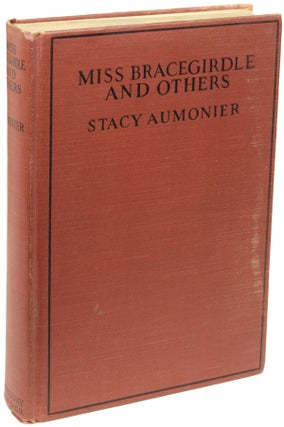
MISS BRACEGIRDLE AND OTHERS.
New York: Doubleday, Page & Company, 1923. Octavo, pp. [1-10] 1-332 [333-334: blank], original brown cloth, front and spine stamped in black. First U. S. edition. Collects thirteen stories, several crime, two of which were used as film sources. Aumonier was a highly regarded short fiction writer, praised by John Galsworthy and James Hilton. [Reference: Hubin, p. 37. Queen, The Detective Short Story, p. 7].

MISS BRACEGIRDLE AND OTHERS.
Garden City, NY: Doubleday, Page & Company, 1923. Octavo, pp. [1-10] 1-332 [333-334: blank], original brown cloth, front and spine stamped in black. First U.S. edition. Collects thirteen stories, several crime, two of which were used as film sources. Aumonier was a highly regarded short fiction writer, praised by John Galsworthy and James Hilton. [Reference: Hubin, p. 37. Queen, The Detective Short Story, p. 7].
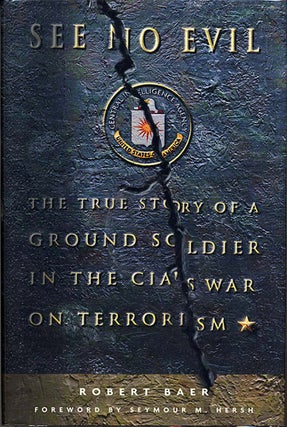
SEE NO EVIL: THE TRUE STORY OF A GROUND SOLDIER IN THE CIA'S WAR ON TERRORISM.
New York: Crown Publishers, [2002]. Octavo, boards. First edition. Career CIA field officer's memoirs. Basis for the George Clooney film Syriana.

IN THE HEAT OF THE NIGHT.
New York, Evanston and London: Harper & Row Publishers, [1965]. Octavo, cloth backed boards. First edition. Introduces the character of Virgil Tibbs, and the basis for the feature film. This copy's text has been marked up to block out set ups for the script of the film. Edgar Award winner for best first novel. [Reference: Hubin, p. 44].

IN THE HEAT OF THE NIGHT.
New York, Evanston and London: Harper & Row Publishers, [1965]. Octavo, cloth backed boards. First edition. Introduces the character of Virgil Tibbs, and the basis for the feature film. This copy's text has been marked up to block out set ups for the script of the film. Edgar Award winner for best first novel. [Reference: Hubin, p. 44].
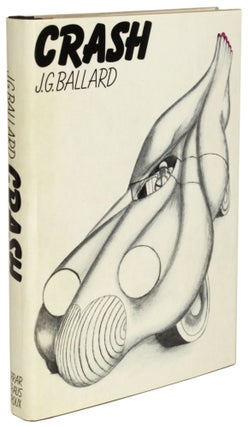
CRASH.
New York: Farrar, Strauss & Giroux, [1973]. Octavo, cloth backed boards. First U. S. edition. "Perhaps Ballard's darkest, most unsettling book". Barron (ed.) Horror Literature, 4-16. Filmed in 1996 by David Cronenberg with James Spader and Holly Hunter. [Reference: Anatomy of Wonder (2004) II-64. Winter list, p. 268].

HIGH-RISE.
London: Jonathan Cape, [1975]. Octavo. boards. First edition. Inscribed and signed by Ballard on the title page. A disturbing look at life in a high rise apartment block which is a commentary on society as a whole. The first line of the book sets the tone: "Later, as he sat on his balcony eating the dog, Dr Robert Laing reflected on the unusual events that had taken place within this huge apartment building during the previous three months." "This book has been called an adult version of Golding's Lord of the Flies." - Barron, Horror Literature 4-18. [Reference: Pringle, Science Fiction: The 100 Best Novels #76. King list, p. 389. Winter list, p. 268. Sargent, British and American Utopian Literature, 1516-1985, p. 364].

WHEN WORLDS COLLIDE with AFTER WORLDS COLLIDE.
New York: Frederick A. Stokes Company, 1933, 1943. Octavo, two volumes, (1): pp. [i-vi] vii-viii 1-344 (2): pp. [i-vi] vii [viii] ix-xiii [xiv-xvi] 1-341 [342-344: blank], (1): original red cloth, front panel stamped in light blue and ruled in blind, spine panel stamped in light blue, fore and bottom edges rough trimmed, (2): original blue cloth, front and spine stamped in gold fore edge untrimmed, bottom edge rough trimmed. First editions. Signed letter by Wylie laid in. The first novel and the sequel. Earth is about to destroyed from a collision with a rogue planet, a chosen few are to escape via a spaceship. A famous, popular catastrophe novel that was a huge commercial success (over half a million copies sold) and was made into a film that helped spark the SF movie boom of the 1950s. In the sequel the survivors start a new civilization. [Reference: Anatomy of Wonder (1976) 3-3; (1981) 2-130; (1987) 2-146; (1995) 2-156; and (2004) II-70. Bailey, Pilgrims Through Space and Time, pp. 125-26. Clareson, Science Fiction in America, 1870s-1930s 042. Clarke, Tale of the Future (1978), p. 62. Clute and Nicholls (eds), The Encyclopedia of Science Fiction (1993), p. 86. Locke, A Spectrum of Fantasy, p. 27. Survey of Science Fiction Literature V, pp. 2463-68. In 333. Bleiler (1978), p. 14. Reginald 00801].
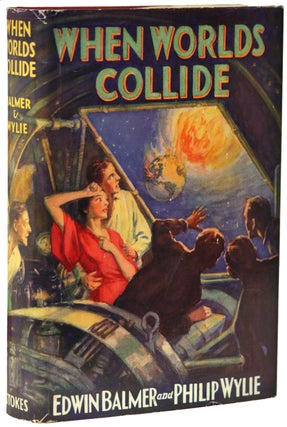
WHEN WORLDS COLLIDE.
New York: Frederick A. Stokes Company, 1933. Octavo, pp. [i-vi] vii-viii 1-344, original red cloth, front panel stamped in light blue and ruled in blind, spine panel stamped in light blue, fore and bottom edges rough trimmed. First edition. A famous, popular catastrophe novel that was a huge commercial success (over half a million copies sold) and was made into a film that helped spark the SF movie boom of the 1950s. [Reference: Anatomy of Wonder (1976) 3-3; (1981) 2-130; (1987) 2-146; (1995) 2-156; and (2004) II-70. Bailey, Pilgrims Through Space and Time, pp. 125-26. Clareson, Science Fiction in America, 1870s-1930s 042. Clarke, Tale of the Future (1978), p. 62. Clute and Nicholls (eds), The Encyclopedia of Science Fiction (1993), p. 86. Locke, A Spectrum of Fantasy, p. 27. Survey of Science Fiction Literature V, pp. 2463-68. In 333. Bleiler (1978), p. 14. Reginald 00801].

THE LAST OF PHILIP BANTER.
Lakewood, CO: Centipede Press, [2020]. Octavo, cloth. New edition. One of 300 numbered copies signed by Ramsey Campbell (introduction) and Dan Rempel (artist). Facsimile signature of John Franklin Bardin. This is copy number 1. New introduction by the author's son Frank C. Bardin. This edition also includes the beginning of an unfinished novel "Black Counted Fair." "Bardin's three novels have close affinities with the Hollywood "film noir" of the 1940s, combining eerily mysterious occurrences with an interest in abnormal psychology and dreams, and an almost Gothic sense of the ways in which the past interpenetrates the present." - St. James Guide to Crime & Mystery Writers, p. 47. Filmed in 1986. [Reference: Hubin (2003), p. 92].

THE INTRUDER.
[Lakewood, CO: Centipede Press, 2013]. Octavo, cloth. New edition. One of 200 numbered copies signed by Roger Anker, William F. Nolan and artist J. K. Potter. A novel about a small Southern town and segregation. This edition features a new introduction by Roger Anker and an afterword by William F. Nolan. Filmed in 1962 by Roger Corman.
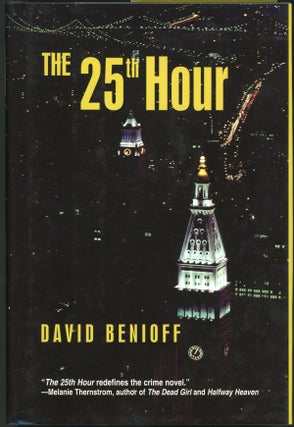
THE 25TH HOUR.
New York: Carroll & Graf Publishers, Inc., [2000]. Octavo, boards. First edition. Contemporary crime novel, filmed in 2002 by Spike Lee.