
Science Fiction Awards (All SF, Fantasy, Horror).
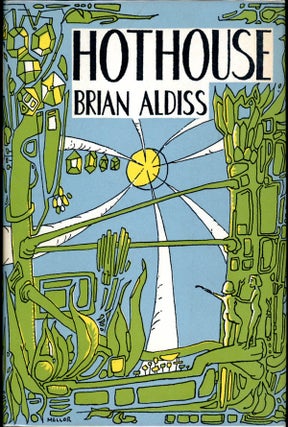
HOTHOUSE.
London: Faber and Faber, [1962]. Octavo, cloth. First edition. Signed by Aldiss on the title page. Issued earlier in the U.S. in a shorter version as The Long Afternoon of Earth (1962). Novelization of five Hothouse stories that won the 1962 Hugo award for best short fiction published in 1961. [Reference: Anatomy of Wonder (1995) 3-3. Pringle, Science Fiction: The 100 Best Novels 34].

HOTHOUSE...
London: Faber and Faber, [1962]. Octavo, cloth. First edition. Issued earlier in the U.S. in a shorter version as The Long Afternoon of Earth (1962). Novelization of five Hothouse stories that won the 1962 Hugo award for best short fiction published in 1961. [Reference: Anatomy of Wonder (1995) 3-3. Pringle, Science Fiction: The 100 Best Novels 34].
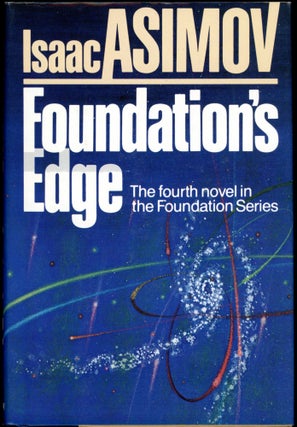
FOUNDATION'S EDGE.
Garden City, NY: Doubleday & Company, Inc., 1982. Octavo, boards. First edition, first printing with code "M36" on page 365. Fourth novel in the Foundation series. "A belated sequel to the 'Foundation Trilogy,' marking Asimov's return to his distinctive brand of cerebral space opera after more than twenty years. In this yarn (and the related novels THE ROBOTS OF DAWN, ROBOTS AND EMPIRE, FOUNDATION AND EARTH and PRELUDE TO FOUNDATION) Asimov explains the galactic history of THE STARS LIKE DUST and the "Foundation" series as a plot by the robots (from the otherwise unconnected 'Robot' stories) to ensure the survival and happiness of the human race, and hints that the history-altering time travelers of THE END OF ETERNITY set up the whole thing." - Pringle, The Ultimate Guide to Science Fiction, second edition (1995), p. 143. Winner of the 1983 Hugo award. 1982 Nebula nominee. Anatomy of Wonder (2004) II-47. Sargent, British and American Literature, 1516-1985, p. 410.
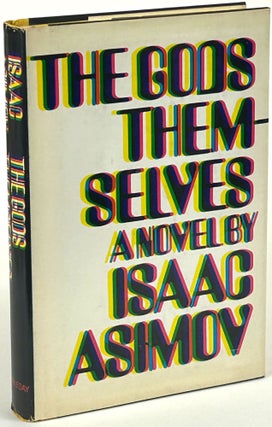
THE GODS THEMSELVES.
Garden City: Doubleday & Company, Inc., 1972. Octavo, cloth. First edition. "In the twenty-second century, Earth and men of a para-universe establish an ideal energy exchange. Through Earthmen's electron pump and the para-men's position pump, the energy needs of both worlds are satisfied without energy loss to either. A few probing skeptics, men and para-men, learn that in time the exchange will explode our Sun, but both scientific establishments ignore their alarm. The 'fathers' of the energy pumps, puffed with pride and selfishness, will not allow their reputation, doctrine, and achievement to be jeopardized ... The blind egotism and leaden conscience of his [Asimov's] scientific establishments offer no promise that a world ruled by scientists rather than politicians would be more free of it." - Berger, Science Fiction and the New Dark Age, p. 130. THE GODS THEMSELVES ... which was only the second genuine singleton of his career and which won both Hugo and Nebula awards, proved to be his finest single creation, a complex tale involving potentially catastrophic energy transfers between alternate universes and -- rarely for him -- intriguing alien beings (they are considerably more interesting than the humans in the cast)." - John Clute / Malcolm J. Edwards, SFE (online). Written with a verve and economy that are missing from Asimov's later novels." - Anatomy of Wonder (2004) II-48. Winner of the 1972 Nebula award and 1973 Hugo award for best novel. [Reference: Survey of Science Fiction Literature II, pp. 909-14].
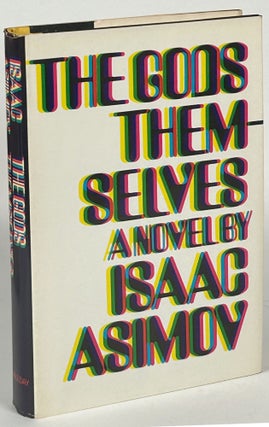
THE GODS THEMSELVES.
Garden City: Doubleday & Company, Inc., 1972. Octavo, cloth. First edition. "In the twenty-second century, Earth and men of a para-universe establish an ideal energy exchange. Through Earthmen's electron pump and the para-men's position pump, the energy needs of both worlds are satisfied without energy loss to either. A few probing skeptics, men and para-men, learn that in time the exchange will explode our Sun, but both scientific establishments ignore their alarm. The 'fathers' of the energy pumps, puffed with pride and selfishness, will not allow their reputation, doctrine, and achievement to be jeopardized ... The blind egotism and leaden conscience of his [Asimov's] scientific establishments offer no promise that a world ruled by scientists rather than politicians would be more free of it." - Berger, Science Fiction and the New Dark Age, p. 130. THE GODS THEMSELVES ... which was only the second genuine singleton of his career and which won both Hugo and Nebula awards, proved to be his finest single creation, a complex tale involving potentially catastrophic energy transfers between alternate universes and -- rarely for him -- intriguing alien beings (they are considerably more interesting than the humans in the cast)." - John Clute / Malcolm J. Edwards, SFE (online). Written with a verve and economy that are missing from Asimov's later novels." - Anatomy of Wonder (2004) II-48. Winner of the 1972 Nebula award and 1973 Hugo award for best novel. [Reference: Survey of Science Fiction Literature II, pp. 909-14].
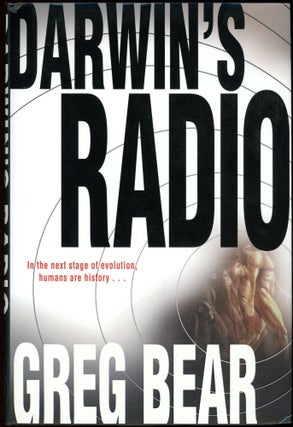
DARWIN'S RADIO.
New York: The Ballantine Publishing Group, [1999]. Octavo, First edition. Biological suspense. Winner of the 2000 Nebula Award for best novel. [Reference: Anatomy of Wonder (2004) II-92].
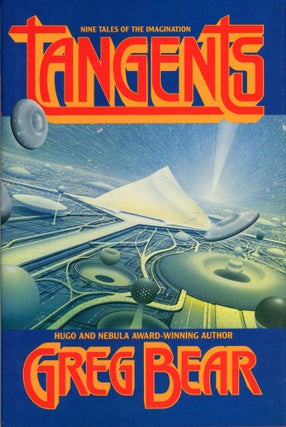
TANGENTS.
[New York]: Warner Books, [1989]. Octavo, cloth-backed boards. First edition. Collects ten stories, including two, "Blood Music" and "Tangents," that won both Hugo and Nebula awards. [Reference: Anatomy of Wonder (1995) 4-42].
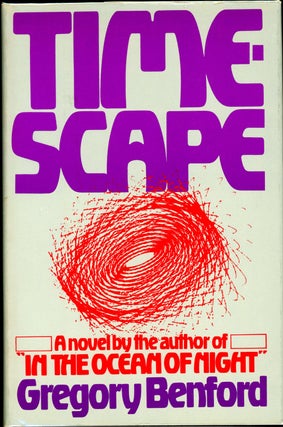
TIMESCAPE.
New York: Simon and Schuster, [1980]. Octavo, cloth backed boards. First edition. Nebula Award winner, 1980. John W. Campbell Memorial Award, 1981. Scientists in the future try to send a warning message to scientists of the past. "Unusual for the realism of its depiction of scientists at work; admirably serious in handling the implications of its theme." Anatomy of Wonder (1995) 4-46. [Reference: Anatomy of Wonder (2004) II-109].
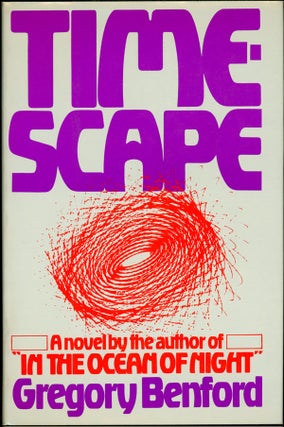
TIMESCAPE.
New York: Simon and Schuster, [1980]. Octavo, cloth backed boards. First edition. Nebula Award winner, 1980. John W. Campbell Memorial Award, 1981. Scientists in the future try to send a warning message to scientists of the past. "Unusual for the realism of its depiction of scientists at work; admirably serious in handling the implications of its theme." Anatomy of Wonder (1995) 4-46. [Reference: Anatomy of Wonder (2004) II-109].

THE DEMOLISHED MAN.
[New York]: A Signet Book/The New American Libary, [1954]. Small octavo, cover art by Stanley Meltzoff, pictorial wrappers. First paperback edition. Winner of the 1953 Hugo award for best novel and runner-up for the 1954 International Fantasy Award. Anatomy of Wonder (2004) II-116. Pringle, Science Fiction: The 100 Best Novels 7. Sargent, British and American Utopian Literature, 1516-1985, Additions. Survey of Science Fiction Literature II, pp. 529-32.
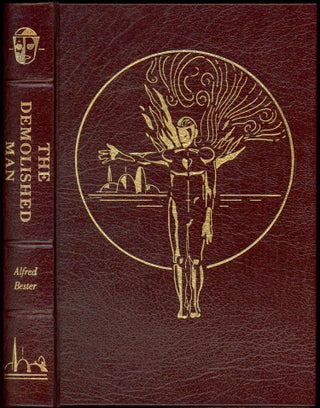
THE DEMOLISHED MAN.
Norwalk, CT: The Easton Press, [1986]. Octavo, full leather, a.e.g. Later edition. New introduction by Kurt Vonnegut. Winner of the 1953 Hugo award for best novel and runner-up for the 1954 International Fantasy Award. Collector's notes laid in. Issued as part of the Easton Press "Masterpieces of Science Fiction" series. [Reference: Anatomy of Wonder (2004) II-116. Pringle, Science Fiction: The 100 Best Novels 7. Sargent, British and American Utopian Literature, 1516-1985, Additions. Survey of Science Fiction Literature II, pp. 529-32].

THE DEMOLISHED MAN.
Chicago: Shasta Publishers, [1953]. Octavo, cloth-backed boards. First edition. One of the subscriber's copies signed by Bester on the front free endpaper. Winner of the 1953 Hugo award for best novel and runner-up for the 1954 International Fantasy Award. [Reference: Anatomy of Wonder (2004) II-116. Pringle, Science Fiction: The 100 Best Novels 7. Sargent, British and American Utopian Literature, 1516-1985, Additions. Survey of Science Fiction Literature II, pp. 529-32].
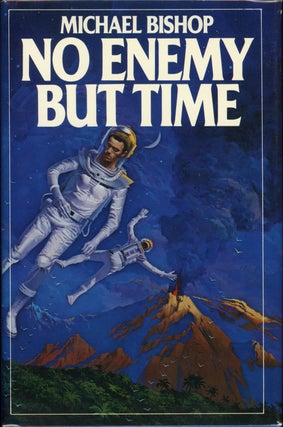
NO ENEMY BUT TIME.
New York: Timescape/Simon and Schuster, 1982. Octavo, Hardcover. First edition. 1982 Nebula award winner. "Brilliant and memorable, written with great conviction." - Anatomy of Wonder 4-63.
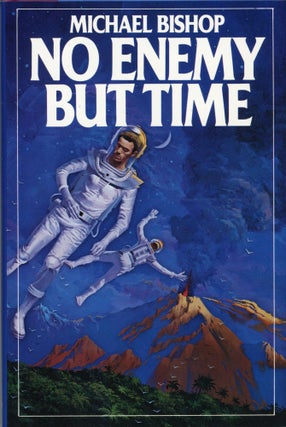
NO ENEMY BUT TIME.
New York: Timescape Distributed by Simon and Schuster, [1982]. Octavo, cloth-backed boards. First edition. Winner of the 1982 Nebula Award for best novel. "Brilliant and memorable, written with great conviction." - Anatomy of Wonder (1995) 4-51. [Reference: Anatomy of Wonder (2004) II-125].
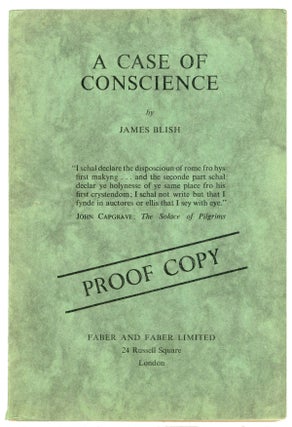
A CASE OF CONSCIENCE ...
London: Faber and Faber Limited, [1958]. Octavo, original green wrappers printed in black. Advance copy (uncorrected proof) of the first British edition. Proof has "First published in mcmlviii" instead of "First published in mcmlix" on copyright page. A novel expanded from a 1953 novella of the same title. "A Jesuit priest visits the 'unfallen' planet Lithia, where he solves a biological riddle and wrestles with his conscience. A thoughtful and entertaining work, with a range of intellectual reference unusual for the American SF of its day -- one of the masterpieces of 1950s SF, and Blish's best book." - Pringle, The Ultimate Guide to Science Fiction, second edition (1995), p. 59. "A rich, ambiguous, deep-cutting probe into the most ultimate of concerns." - Anatomy of Wonder (2004) II-136. The final part of the "After Such Knowledge" trilogy. Winner of the 1959 Hugo award for best novel. [Reference: Pringle, Science Fiction: The 100 Best Novels 26. Survey of Science Fiction Literature I, pp. 303-07].

STAND ON ZANZIBAR.
Garden City, New York: Doubleday & Company, Inc., 1968. Octavo, cloth. First edition. The Hugo award winner for best novel, 1969. A Nebula nominee for 1968. "...one of the key works of the period." - Anatomy of Wonder (1995) 4-74. [Reference: Anatomy of Wonder (1995) 4-74. Survey of Science Fiction Literature V, pp. 2140-45].

STAND ON ZANZIBAR.
Norwalk, CT: The Easton Press, [1987]. Octavo, frontispiece by Vincent DiFate, full leather, a.e.g. Later edition. New introduction by David Brin. "Mammoth attempt to picture the world as it may well be in the early twenty-first century -- overpopulated, over automated, and torn by riots and muggings. The pop sociologist Chad C. Mulligan comments wryly on it all, and he is the nearest thing to a hero in this densely peopled book. Primarily didactic in intent, it borrows surface bravura from John Dos Passos's social realist USA trilogy (1930-1936)." - Pringle, The Ultimate Guide to Science Fiction, second edition (1995), p. 343. Winner of the 1969 Hugo award for best novel. 1968 Nebula nominee. Winner of the 1970 British Science Fiction Association Award for best novel and the French Prix Apollo. Collector's notes laid in. Part of the "Masterpieces of Science Fiction" series. [Reference: Anatomy of Wonder (2004) II-175. Survey of Science Fiction Literature V, pp. 2140-45].

STAND ON ZANZIBAR.
Norwalk, CT: The Easton Press, [1987]. Octavo, frontispiece by Vincent DiFate, full leather, a.e.g. Later edition. New introduction by David Brin. "Mammoth attempt to picture the world as it may well be in the early twenty-first century -- overpopulated, over automated, and torn by riots and muggings. The pop sociologist Chad C. Mulligan comments wryly on it all, and he is the nearest thing to a hero in this densely peopled book. Primarily didactic in intent, it borrows surface bravura from John Dos Passos's social realist USA trilogy (1930-1936)." - Pringle, The Ultimate Guide to Science Fiction, second edition (1995), p. 343. Winner of the 1969 Hugo award for best novel. 1968 Nebula nominee. Winner of the 1970 British Science Fiction Association Award for best novel and the French Prix Apollo. Collector's notes laid in. Part of the "Masterpieces of Science Fiction" series. [Reference: Anatomy of Wonder (2004) II-175. Survey of Science Fiction Literature V, pp. 2140-45].

STAND ON ZANZIBAR.
[Lakewood, CO: Centipede Press, 2009]. Octavo, leather backed illustrated cloth. Enlarged edition. One of 300 numbered copies signed by Brunner and Kim Stanley Robinson (introduction). This is copy number 1. New introduction by Kim Stanley Robinson. This edition includes an essay by Brunner "Viewpoint: Childless Couples." "Mammoth attempt to picture the world as it may well be in the early twenty-first century -- overpopulated, over automated, and torn by riots and muggings. The pop sociologist Chad C. Mulligan comments wryly on it all, and he is the nearest thing to a hero in this densely peopled book. Primarily didactic in intent, it borrows surface bravura from John Dos Passos's social realist USA trilogy (1930-1936)." - Pringle, The Ultimate Guide to Science Fiction, second edition (1995), p. 343. Winner of the 1969 Hugo award for best novel. 1968 Nebula nominee. Winner of the 1970 British Science Fiction Association Award for best novel and the French Prix Apollo. [Reference: Anatomy of Wonder (2004) II-175. Survey of Science Fiction Literature V, pp. 2140-45].

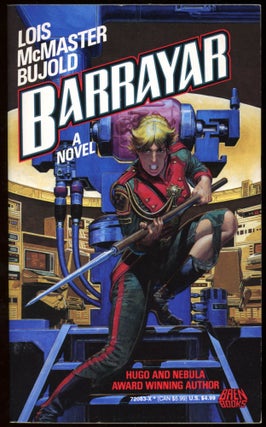
BARRAYAR.
[New York]: Baen Books, [1991]. Octavo, pictorial wrappers. First edition. Paperback original. Winner of 1992 Hugo Award for best novel. 1991 Nebula nominee. "Traditional space opera at its very best with a mild feminist tone and twist." - Anatomy of Wonder (2004) II-184. [Reference: Broderick and Di Filippo, Science Fiction: The 101 Best Novels, 1985-2010 #19].
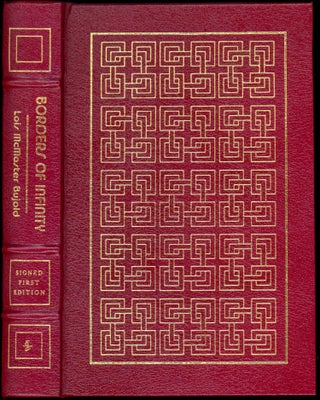
BORDERS OF INFINITY.
Norwalk, CT: The Easton Press, [1989]. Octavo, frontispiece by Ray Miller, full leather, a.e.g. First hardcover edition. One of an unknown number of copies signed by Bujold on a special limitation page. New introduction by James Gunn. A Miles Vorkosigan adventure. A section of this novel comprises "The Mountains of Mourning," winner of the Hugo and Nebula awards for best novella. Part of the Easton Press signed first edition series. [Reference: Anatomy of Wonder (2004) II-186].
FALLING FREE.
[New York]: Baen Books, [1988]. Octavo, pictorial wrappers. First edition. Paperback original. Winner of the 1988 Nebula award for best novel. [Reference: Anatomy of Wonder (2004) II-185. Hartwell, 200 Significant SF Books by Women, 1984-2001].
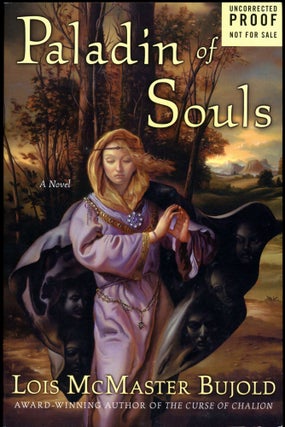
PALADIN OF SOULS.
[New York]: Eos An Imprint of HarperCollinsPublishers, [2003]. Octavo, pictorial wrappers. Advance copy, uncorrected proof, of the first edition. Signed by Bujold on the title page. Epic fantasy, a sequel to THE CURSE OF CHALION. Winner of the Hugo award, Nebula award and Locus award for best novel, 2004.
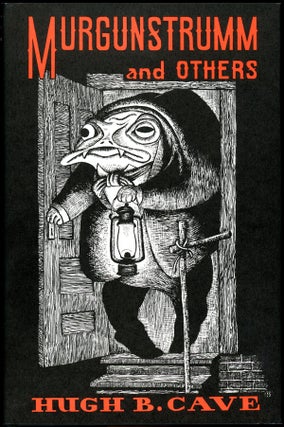
MURGUNSTRUMM AND OTHERS.
Chapel Hill, NC: Carcosa, 1977. Octavo, cloth. First edition. One of the subscriber's copies with tipped in plate signed by Cave and artist Lee Brown Coye. Omnibus collection of twenty-six horror stories selected from the pulps. Winner of the 1978 World Fantasy Award for best collection. [Reference: Barron (ed), Horror Literature 3-48. Jones and Newman (eds), Horror: 100 Best Books 74. Tymn (ed), Horror Literature 4-63. Winter list, page 268].

MURGUNSTRUMM AND OTHERS.
Chapel Hill, NC: Carcosa, 1977. Octavo, cloth. First edition. One of the subscriber's copies with tipped in plate signed by Cave and artist Lee Brown Coye. Omnibus collection of twenty-six horror stories selected from the pulps. Winner of the 1978 World Fantasy Award for best collection. [Reference: Barron (ed), Horror Literature 3-48. Jones and Newman (eds), Horror: 100 Best Books 74. Tymn (ed), Horror Literature 4-63. Winter list, page 268].