
New York Book Fair 2024
Our list of stock from the recent New York book fair.
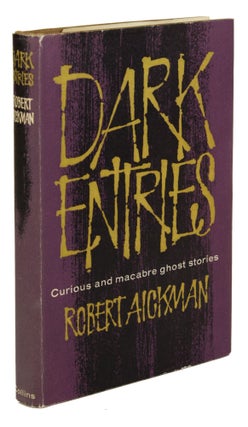
DARK ENTRIES.
London: Collins, 1964. Octavo, boards. First edition. Aickman's first solo collection of short fiction. Collects six stories. [Reference: Tymn (ed), Horror Literature 4-2].
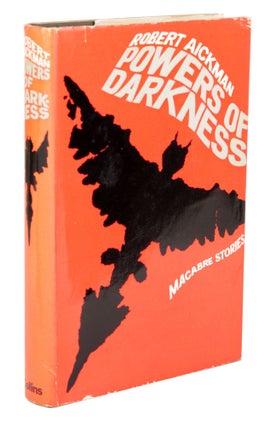
POWERS OF DARKNESS.
London: Collins, 1966. Octavo, boards. First edition. The author's second solo collection of macabre stories with six stories. [Reference: Barron (ed.): Horror Literature 4-7].
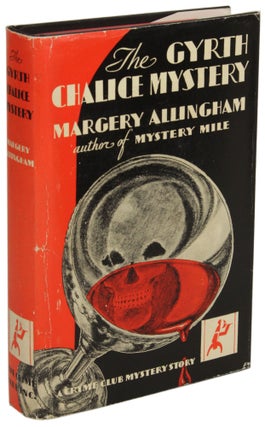
THE GYRTH CHALICE MYSTERY: AN ALBERT CAMPION DETECTIVE STORY.
Garden City: Published for The Crime Club, Inc. by Doubleday, Doran & Company, Inc., [1931]. Octavo, pp. [i-vi] vii-viii 11-321 [322: ad] [note: text complete despite gap in pagination], original black cloth, front and spine panels stamped in red, top edge stained red, other edges rough trimmed, pictorial endpapers. First U.S. edition. A Campion mystery. "An early story with good scenes and relieved from murder by elegant robbery and clerical personages, but somewhat touched by by the excessive lightheartedness of the period." - Barzun and Taylor, A Catalogue of Crime (1989) 66. Published in the UK as LOOK TO THE LADY. [Reference: Hubin (1994), p. 13].
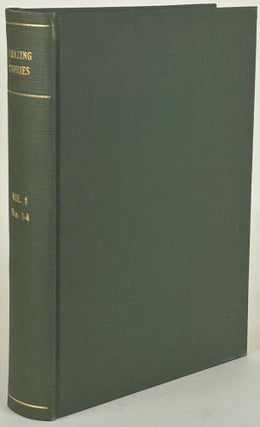
AMAZING STORIES. (Issues 1-4 bound).
New York: Experimenter Publications, Inc., 1926. Large octavo, bound volume, covers by Frank R. Paul, pictorial wrappers in green cloth spine stamped in gold. Pulp magazine, bedsheet format, bound. The first four issues of Amazing stories. [Reference: Tymm and Ashley, Science Fiction, Fantasy, and Weird Fiction Magazines, pp. 14-49].
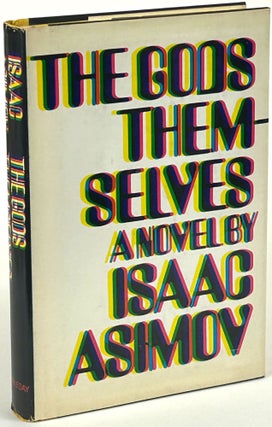
THE GODS THEMSELVES.
Garden City: Doubleday & Company, Inc., 1972. Octavo, cloth. First edition. "In the twenty-second century, Earth and men of a para-universe establish an ideal energy exchange. Through Earthmen's electron pump and the para-men's position pump, the energy needs of both worlds are satisfied without energy loss to either. A few probing skeptics, men and para-men, learn that in time the exchange will explode our Sun, but both scientific establishments ignore their alarm. The 'fathers' of the energy pumps, puffed with pride and selfishness, will not allow their reputation, doctrine, and achievement to be jeopardized ... The blind egotism and leaden conscience of his [Asimov's] scientific establishments offer no promise that a world ruled by scientists rather than politicians would be more free of it." - Berger, Science Fiction and the New Dark Age, p. 130. THE GODS THEMSELVES ... which was only the second genuine singleton of his career and which won both Hugo and Nebula awards, proved to be his finest single creation, a complex tale involving potentially catastrophic energy transfers between alternate universes and -- rarely for him -- intriguing alien beings (they are considerably more interesting than the humans in the cast)." - John Clute / Malcolm J. Edwards, SFE (online). Written with a verve and economy that are missing from Asimov's later novels." - Anatomy of Wonder (2004) II-48. Winner of the 1972 Nebula award and 1973 Hugo award for best novel. [Reference: Survey of Science Fiction Literature II, pp. 909-14].
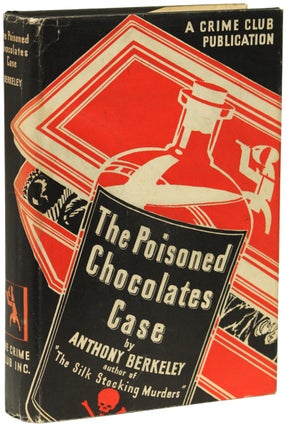
THE POISONED CHOCOLATES CASE.
Garden City, NY: Published for the Crime Club, Inc. by Doubleday, Doran & Company, Inc., 1929. Octavo, pp. [1-10] 1-299 [230: blank] [231: Crime Club statement] [232: blank], cloth. First U.S. edition. Mystery novel featuring sleuth Roger Sheringham. "...it should appeal to those who like the combination of good characterization and armchair dectection". - Pronzini and Muller, 1001 Midnights, The Aficionado's Guide to Mystery and Detective Fiction, pp. 36-37. A Haycraft-Queen cornerstone volume.
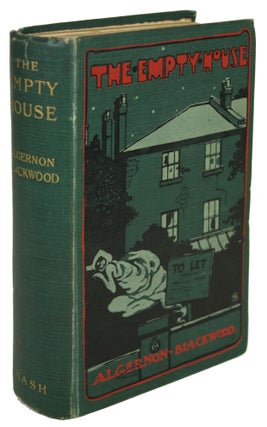
THE EMPTY HOUSE AND OTHER GHOST STORIES.
London: Eveleigh Nash, 1906. Octavo, pp. [i-ii] iii [iv] [1] 2-316 + 32-page publisher's catalogue dated "Autumn 1906" inserted at rear, original pictorial green cloth, front panel stamped in black, red and white, spine panel stamped in gold, bottom edge untrimmed. First edition. The author's first book. Collects ten stories. [Reference: Ashley, Who's Who in Horror and Fantasy Fiction, pp. 36-7. Barron (ed), Horror Literature 3-26. Bleiler, The Guide to Supernatural Fiction 175. Sullivan (ed), The Penguin Encyclopedia of Horror and the Supernatural, pp. 38-40. Survey of Modern Fantasy Literature III, pp. 1442-43. Tymn (ed), Horror Literature 3-30. Bleiler (1978), p. 24. Reginald 01383. Ashley A.1.1].
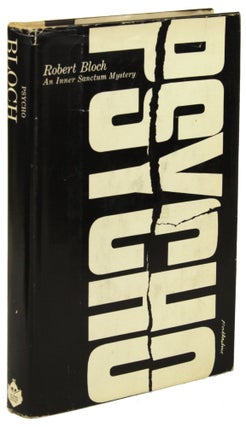
PSYCHO.
New York: Simon & Schuster, 1959. Octavo, boards. First edition. On a label affixed to the front paste down, this copy is inscribed and signed by Bloch to a well known early fan. "Psycho is a genre masterpiece which set the pattern for the psychological suspense-horror novel." - Barron (ed), Horror Literature 4-46. Filmed by Alfred Hitchcock. Jones and Newman (eds), Horror: 100 Best Books 57. [Reference: Jones and Newman (eds), Horror: 100 Best Books 57].
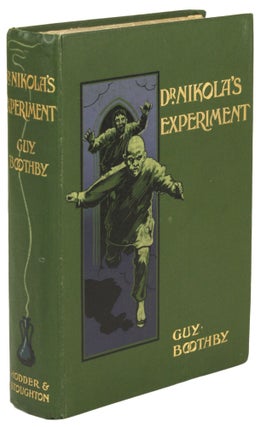
DR. NIKOLA'S EXPERIMENT.
London: Hodder and Stoughton, 1899. Octavo, pp. [i-ii] iii-vi [vii-viii 1-340 [341-342: blank] [note: last leaf is a blank], twenty inserted illustrations by Sydney Cowell, original pictorial green cloth, front and spine panels stamped in black, white, blue-gray and gold, all edges untrimmed. First edition. The fourth novel with Doctor Nikola, this one featuring him. Doctor Nikola has a continuing quest for immortality and world domination. Among his attributes are, great wealth, strong deductive powers, a dedicated scientist, hypnotic powers, a master of disguise and familiarity with the occult. Doctor Nikola continues on with his experiments of rejuvenation. [Reference: Ashley, Who's Who in Horror and Fantasy Fiction, p. 40. Bleiler, Science-Fiction: The Early Years 242. Blackford, et al., Strange Constellations: A History of Australian Science Fiction, p. [221]. Sullivan (ed), The Penguin Encyclopedia of Horror and the Supernatural, p. 47. Bleiler (1978), p. 27. Reginald 01626. Hubin (1994), p. 87].
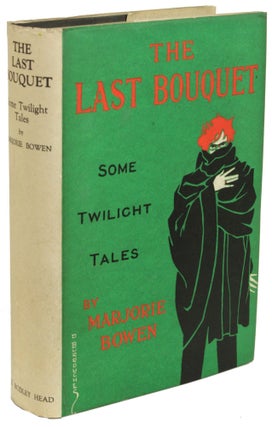
THE LAST BOUQUET: SOME TWILIGHT TALES.
London: John Lane The Bodley Head Limited, [1933]. Octavo, pp.[i-iv] v [vi-viii] 1-348 [349-352: ads], original black cloth, front and spine panels stamped in green, top edge stained green. First edition. Bowen’s own selection of her best supernatural and horror stories, fourteen in all, many reprinted from earlier volumes that are virtually unobtainable but four original to this volume -- “The Last Bouquet,” “The Lady Clodagh,” “Madam Spitfire,” and “The Fair Hair of Ambrosine.” Regardless of the time periods in which her stories are set, Bowen’s supernatural fiction situates horror within the complex interplay among sexuality, desire, and romance. Focusing on women who find themselves at the mercy and whims of a patriarchal culture, Bowen’s protagonists are primarily repressed spinsters, abused wives, jilted lovers, and vengeful widows, characters whose frustrated passions often result in madness and violence. Highlights in THE LAST BOUQUET: SOME TWILIGHT TALES include “The Avenging of Ann Lette” (murderer brought to justice by his own astral projection), “Kecksies” (a horrific tale of rape perpetrated by a reanimated corpse), “Florence Flannery” (brilliant reworking of the demon lover theme involving a carnivorous giant fish), and “Madam Spitfire” (villainous widow’s evil plans thwarted by the ghost of her husband). Aside from being championed by Edward Wagenknecht and Jessica Amanda Salmonson, Bowen has never quite received the attention or the critical acclaim that is her due. She is one of the finest writers of supernatural fiction of the first half of the 20th century, and she belongs on the shelf beside M. R. James, Oliver Onions, and Edith Wharton. [Reference: Barron (ed), Horror Literature 3-33. Clute and Grant (eds), The Encyclopedia of Fantasy (1997), p. 131. Sullivan (ed), The Penguin Encyclopedia of Horror and the Supernatural, pp. 50-1. Wilson, Shadows in the Attic, p. 96. Bleiler (1978), p. 28. Reginald 01702].
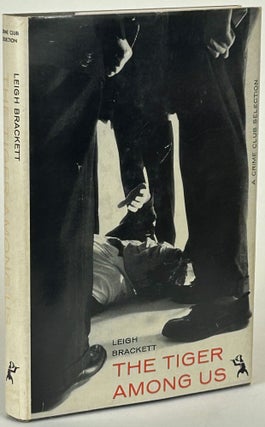
THE TIGER AMONG US.
Garden City, NY: Published For The Crime Club By Doubleday & Company, Inc., 1957. Octavo, boards. First edition. An average neighborhood family man is brutally beaten by five young men. When he recover he tries to find the identities of the culprits, who have continued to attack people. "This is Brackett's best crime novel-a simple, straightforward, consistently gripping, and powerful story of one man's nightmare encounter with random teenage violence." "Fine writing and some genuinely harrowing scenes make THE TIGER AMONG US one of the best of the spate of fifties novels dealing with juvenile delinquency. In the forcefulness of its message, in fact, it is second only to Evan Hunter's mainstream novel THE BLACKBOARD JUNGLE." - Pronzini and Muller, 1001 Midnights, The Aficionado's Guide to Mystery and Detective Fiction, p. 81. Filmed in 1962 as "13 West Street" with Alan Ladd and Rod Steiger. [Reference: Hubin, p. 92].
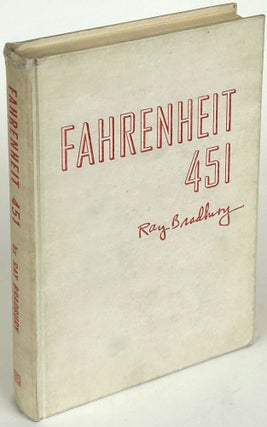
FAHRENHEIT 451 ...
New York: Ballantine Books, [1953]. Octavo, white asbestos boards. First edition. One of 200 numbered copies signed by Bradbury and bound in Johns-Manville Quinterra, an asbestos material. This is copy number 50. Laid in are labels signed and inscribed by Bradbury to a well known fan. A short novel expanded from the novella "The Fireman" published in 1951. "While the jet bombers boom overhead and another nuclear war threatens, Americans live a mindless life in a society where everyone is encouraged to lose himself in such distractions as four-wall television, hearing-aid radios, high-speed travel, and group sports. Life is reduced to the paste-pudding norm of a mass audience, for it serves the purpose of the government to keep people from thinking ... The gadget are, of course, marvelous and everywhere, while the greatest enemies of the status quo are books, which, when they are occasionally discovered, are burned by firemen who are, in this fireproof age, no longer needed to put out fires, but to set them ..." - Hillegas, The Future as Nightmare, pp. 158-9. "In a totalitarian state, books are burned and private thought or action is criminal." - Gerber, Utopian Fantasy (1973), p. 159. Filmed in 1966 by Francois Truffaut. [Reference: Anatomy of Wonder (2004) II-153. Pringle, Science Fiction: The 100 Best Novels 8. Survey of Science Fiction Literature II, pp. 749-55].
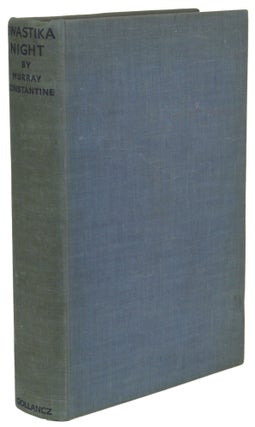
SWASTIKA NIGHT.
London: Victor Gollancz Ltd, 1937. Octavo, pp. [1-4] 5-287 [288], original blue cloth, spine stamped in dark blue. First edition. Important proto-feminist scientific romance. Burdekin's "best known novel examines a Nazi-dominated Europe 500 years hence through the eyes of the young German protagonist, who begins to understand that something is perhaps awry in a world where women are breeding-animals and Hitler is deified ... a writer of considerable interest. Her work is at times surreptitiously couched, and her message is too often found embedded in romance-fiction plotting, but Burdekin can now be seen as a figure of contemporary interest." - Clute and Nicholls (eds), The Encyclopedia of Science Fiction (1993), p. 175. [Reference: Anatomy of Wonder (1987) 2-21; (1995) 2-26; and (2004) II-278. Clarke, Tale of the Future (1978), p 71. Locke, A Spectrum of Fantasy, pp. 57-8. Sargent, British and American Utopian Literature, 1516-1985, p. 213. Bleiler (1978), p. 48. Reginald 03323].
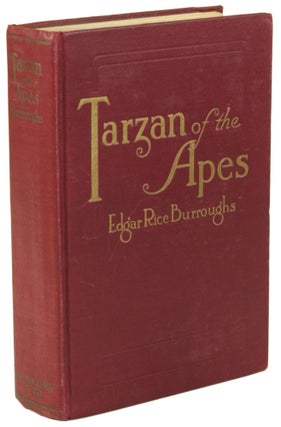
TARZAN OF THE APES.
Chicago: A.C. McClurg & Co., 1914. Octavo, pp. [1-10] 1-400 [401] [402-406: blank] [note: first and last two leaves are blanks], original red cloth, front stamped in blind and gold, spine stamped in gold. First edition, first printing with "W. F. Hall Printing Co. / Chicago" set in Old English type on two lines on verso of title leaf, first binding without acorn device on spine panel. Signed leaf by Burroughs tipped in. First of the Tarzan novels, one of the iconic characters of 20th century fiction, basis for many films, radio and television shows. [Reference: Anatomy of Wonder (1976) 2-32; (1981) 1-32; (1987) 1-18; and (1995) 1-18. Barron (ed), Fantasy Literature 3-62. Bleiler, Science-Fiction: The Early Years 315. Cawthorn and Moorcock, Fantasy: The 100 Best Books 26. Clareson, Science Fiction in America, 1870s-1930s 125. Survey of Modern Fantasy Literature IV, 1884-90. Survey of Science Fiction Literature V, pp. 2229-35. In 333. Bleiler (1978), p. 36. Reginald 02331. Heins TA-2. Blanck, Peter Parley to Penrod, p. 134].
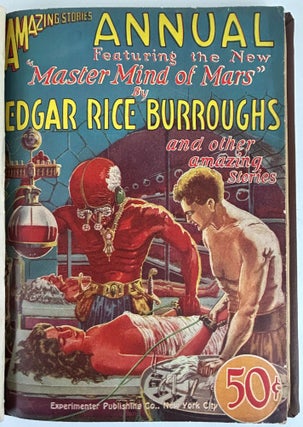
AMAZING STORIES ANNUAL (Bound Volume).
New York: Experimenter Publishing Co., 1927. Large octavo, single issue, bound volume, pictorial wrappers in brown cloth with spine stamped in gold. Bedsheet-sized pulp, bound. This features the first printing of "Master Mind of Mars" by Edgar Rice Burroughs. The only issue of AMAZING STORIES ANNUAL. Released in July 1927, its 100,000-print run sold out. The success of the ANNUAL encouraged Gernsback to launch AMAZING STORIES QUARTERLY in January 1928. [Reference: Tymn and Ashley (eds), Science Fiction, Fantasy, and Weird Fiction Magazines, pp. 49-51].
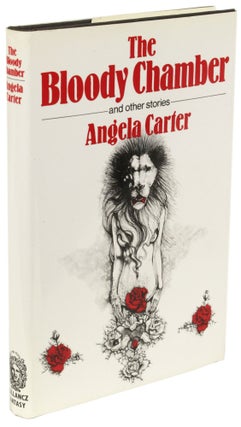
THE BLOODY CHAMBER: AND OTHER STORIES.
London: Victor Gollancz Ltd, 1979. Octavo, boards. First edition. Ten fantasies including "The Company of Wolves," (filmed in 1984 by Neil Jordan). "The Bloody Chamber is often wrongly described as a group of traditional fairy tales given a subversive feminist twist. In fact, these are new stories, not re-tellings. As Angela Carter made clear, "My intention was not to do 'versions' or, as the American edition of the book said, horribly, 'adult' fairy tales, but to extract the latent content from the traditional stories and to use it as the beginnings of new stories." She knew from the start that she was drawn to "Gothic tales, cruel tales, tales of wonder, tales of terror, fabulous narratives that deal directly with the imagery of the unconscious". "The Bloody Chamber is like a multifaceted glittering diamond reflecting and refracting a variety of portraits of desire and sexuality - heterosexual female sexuality - which, unusually for the time, 1979, are told from a heterosexual female viewpoint." "The stories in The Bloody Chamber reverberate with deep and unmistakable imaginative pleasure. There is an astonishing extravivid materiality to this alternative world she invented..." - New review by Helen Simpson in The Guardian, 24 June, 2006. [Reference: Barron (ed.) Fantasy Literature 4A-63. See Barron (ed), Fantasy and Horror (1999) 6-81].
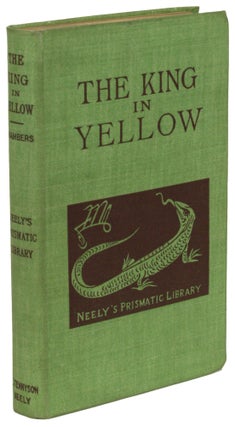
THE KING IN YELLOW ...
Chicago: Neely, 1895. Small octavo, pp. [1-2] [1-9] 10-316 [317: ad] [318: blank], original pictorial green cloth, front and spine panels stamped in brown, top edge gilt, other edges untrimmed. First edition. Brief handwritten note signed by Chambers laid in commenting to the recipient that his copy of THE KING IN YELLOW was not a first edition (obviously not this copy). Of the three printings with title pages dated 1895, this one is generally accepted as the first. There is no inserted frontispiece, page [318] is blank, lizard design is on the front cover, and sheets bulk 1.5 cm. The author's second book and first collection of short stories. "One of the most important works of supernatural horror between Edgar Allan Poe and modern horror fiction." - Bleiler (ed), Supernatural Fiction Writers: Fantasy and Horror, p. 739. "Surprisingly vital stories, undoubtedly the best work that Chambers did. A landmark book in abandoning the ghosts of Victorian literary tradition and concentrating on the nightmare." - Bleiler, The Guide to Supernatural Fiction 364. "... one of the basic documents in the history of fantastic fiction." - Bleiler, Science-Fiction: The Early Years 396. [Reference: Bleiler, The Guide to Supernatural Fiction 364. Survey of Modern Fantasy Literature II, pp. 844-47. Barron (ed), Horror Literature 2-12. Sargent, British and American Utopian Literature, 1516-1985, Additions. Tymn (ed), Horror Literature 3-49].
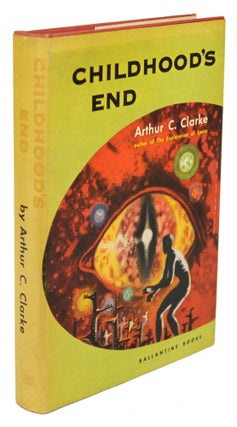
CHILDHOOD'S END.
New York: Ballantine Books, [1953]. Octavo, cloth. First edition. An enormously popular novel presaging Clarke's major thematic statements in 2001: A SPACE ODYSSEY. Aired as a miniseries on the SyFy channel in December 2015. [Reference: Anatomy of Wonder (2004) II-246. Pringle, Science Fiction: The 100 Best Novels 9. Survey of Science Fiction Literature I, pp. 337-41].
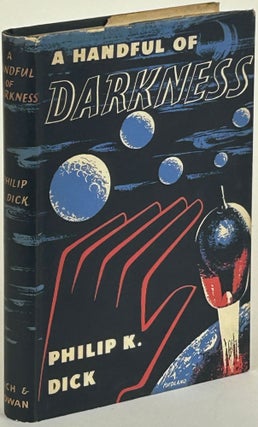
A HANDFUL OF DARKNESS.
London, Melbourne, Sydney... Rich and Cowan, [1955]. Octavo, boards. First edition, first binding (blue boards spine stamped in silver). The author's second book, first collection of short fiction, and first hardcover book. A collection of 15 stories.
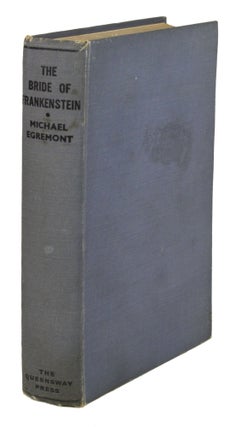
THE BRIDE OF FRANKENSTEIN (SEQUEL TO FRANKENSTEIN).
London: The Queensway Press, [1936]. Octavo, pp. [1-8] 9-252 [253-256] [note: first two and last two leaves are blank and are used as front and rear paste-downs and flyleaves], original blue-gray cloth, spine panel stamped in black. First edition. One of two binding states (the other is black cloth stamped in green), priority, if any, not known. Copies with the Queensway Press imprint were intended for the library market and were sold for 2/6, while the simultaneous cheaper issue with the Readers Library imprint were sold in Woolworth's for 6d. Novel based on the James Whale film "The Bride of Frankenstein" (1935) starring Elsa Lanchester and Boris Karloff. From George Locke's introduction to the American edition published by Bookfinger, he provides the following information: After the movie was completed it was realized that no book existed for a tie-in. The Hutchinson (U.K.) publishing group which owned the Readers Library imprint commissioned author Michael Harrison to produce a novel. Mr. Harrison was given three weeks to produce a finished work. Harrison started working from a shooting script for the film which contained not only the dialog but the shooting details also. After getting bogged down following the script and working under deadline Harrison decided to ignore the script (but not the story). "...the remaining work represented so radical a departure from the script that the finished book was to all intents and purposes original fiction." Harrison took his pseudonym from a public house, "The Egremont Arms." [Reference: Locke, A Spectrum of Fantasy, p. 77. Sullivan (ed), The Penguin Encyclopedia of Horror and the Supernatural, pp. 53-4. Bleiler (1978), p. 68. Reginald 04717].
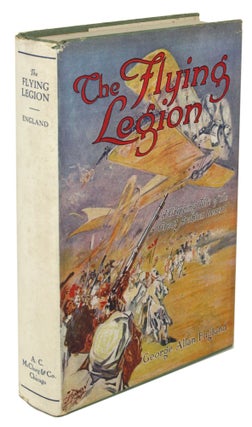
THE FLYING LEGION ...
Chicago: A. C. McClurg & Co., 1920. Octavo, pp. [1-10] 1-394, inserted frontispiece with illustration by P. J. Monahan, original blue-green cloth, front and spine panels stamped in brown. First edition. Adventure story first published as a six-part serial in ALL-STORY 15 November - 20 December 1919. A wealthy soldier of fortune and Islamist, whose inventions far surpass world technology of his day, forms the Legion in an unsuccessful attempt to reform Islam, which he believes to be the true religion. [Reference: Anatomy of Wonder (1976) 2-74 and (1981) 1-68. Bleiler, Science-Fiction: The Early Years 679. Clareson, The Emergence of American Science Fiction: 1880-1915, pp. 177-79. Clareson, Science Fiction in America, 1870s-1930s 284. Locke, A Spectrum of Fantasy, p. 79. In 333. Bleiler (1978), p. 69. Reginald 04905. Smith, American Fiction, 1901-1925 E-195].
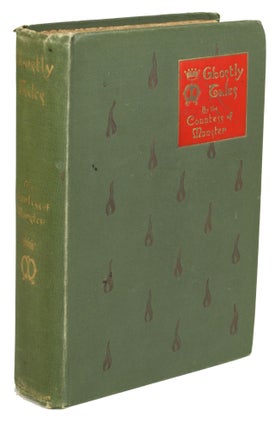
GHOSTLY TALES.
London: Hutchinson & Co., 1896. Octavo, pp. [1-8] 1-320 [note: first leaf is a blank], sixteen inserted plates with illustrations by Fred Hyland, original decorated sage green cloth, front panel stamped in red and gold, spine panel stamped in gold, all edges untrimmed. First edition. An important late Victorian collection of ghost stories similar to those of Mrs. Baldwin and Mrs. Molesworth. "A rare collection of high quality Victorian ghost stories, which seems several decades ahead of its time. Fitzclarence's ghost stories are usually more swiftly paced than those of her contemporaries and this, coupled with a plain and direct writing style, have allowed the tales to retain their interest and bear reexamination by new generations of readers. Several of the author's stories have been revived by anthologists such as Hugh Lamb looking for powerful but less familiar supernatural material." - Wilson, Shadows in the Attic, p. 219. According to Robert Knowlton, the stories are "quite nicely written." [Reference: Not in Bleiler (1948; 1978) or Reginald (1979; 1992)].
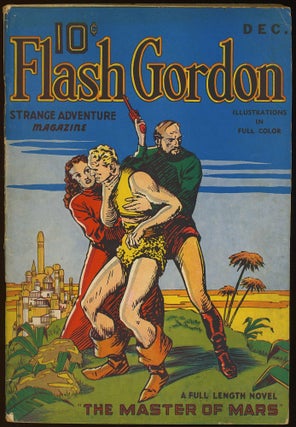
FLASH GORDON STRANGE ADVENTURE MAGAZINE.
New York: C.J.H. Publications, Inc., 1936. Large octavo, single issue, illustrations by Fred Meagher, pictorial wrappers saddle stapled. Pulp magazine. The only issue, which includes eight full page color illustrations. An attempt to blend the comic strip and pulp field which did not find the right audience. Includes the lead story which stars Flash Gordon and three other SF stories. [Reference: Tymm and Ashley, Science Fiction, Fantasy, and Weird Fiction Magazines, pp. 273-274].
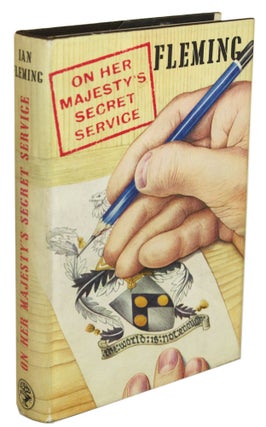
ON HER MAJESTY'S SECRET SERVICE.
London: Jonathan Cape, [1963]. Octavo, original black boards, front stamped in white, spine stamped in silver. First edition. A James Bond novel. The second appearance of the head of SPECTRE, Ernst Stavro Blofeld. Made into a feature film. [Reference: Gilbert: Ian Fleming The Bibliography, A11a (1.1). Hubin, p. 288. Smith and White: Cloak and Dagger Fiction (3rd ed.) 1887].
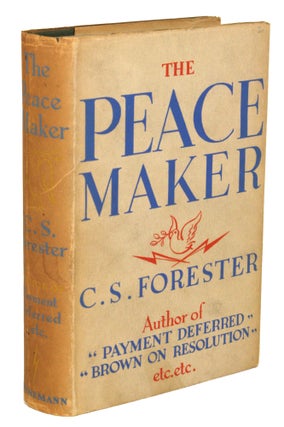
THE PEACEMAKER.
London: William Heinemann Ltd, [1934]. Octavo. [i-viii] 1-341 [342-344, blank], original green boards, spine stamped in gold. First edition. One of the major SF novels of the 1930's. "A bitterly ironic story about an ineffectual schoolmaster whose mathematical genius leads him to construct a machine which will demagnetize iron at a distance. He is led by unfortunate circumstance to use the machine in a hopeless attempt to blackmail England into initiating a program of disarmament." - Anatomy of Wonder (1995) 2-38. [Reference: Anatomy of Wonder (1976) 3-19; (1981) 2-28; (1987) 2-32; and (2004) II-413. Clarke, Tale of the Future (1978), p. 65. Clareson, Science Fiction in America, 1870s-1930s 305. Locke, A Spectrum of Fantasy Volume II, p. 46. Stableford, Scientific Romance in Britain 1890-1950, p. 259. In 333. Bleiler (1978), p. 75. Reginald 05518].